
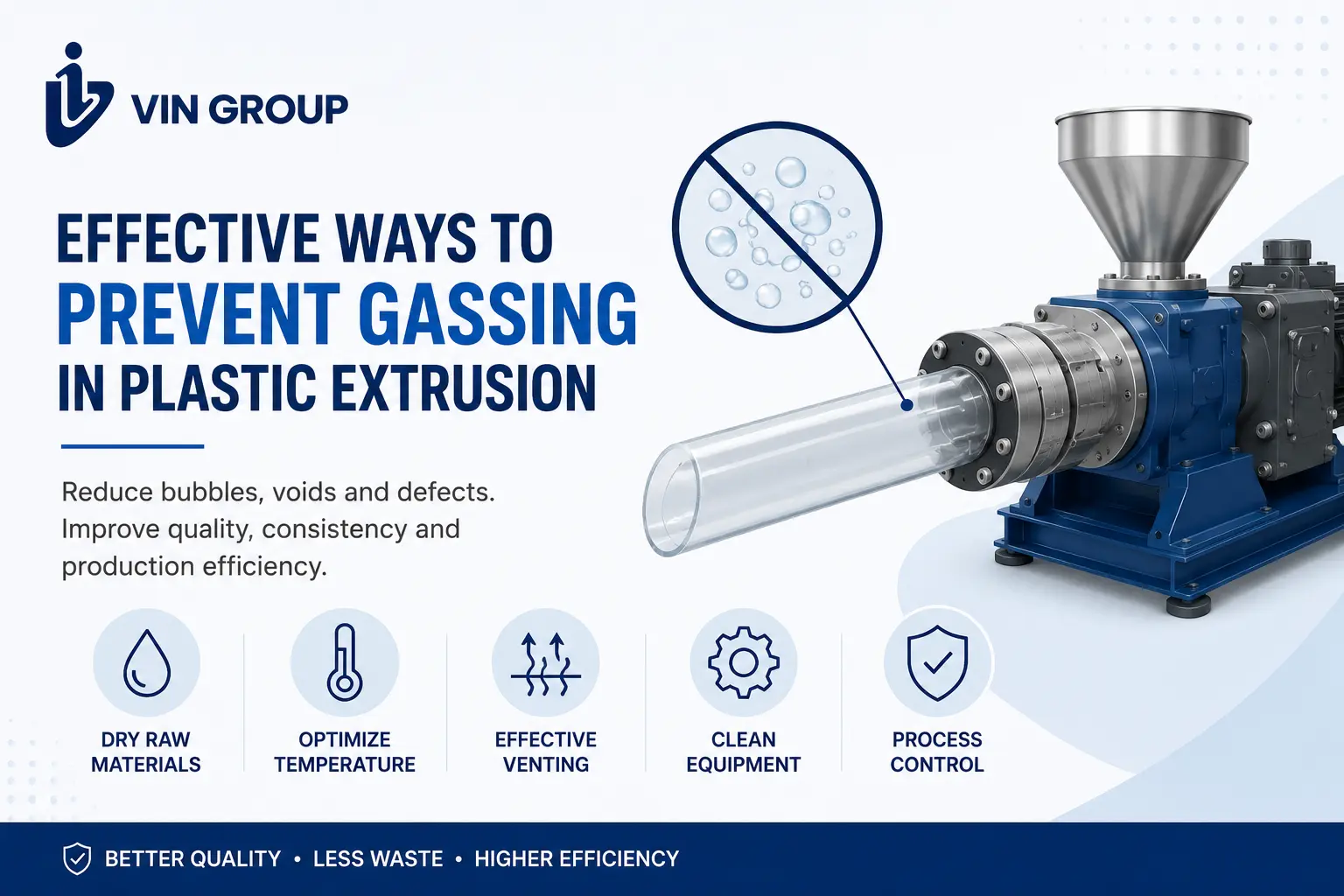
Effective Ways to Prevent Gassing in Plastic Extrusion
Introduction
Plastic extrusion is one of the most widely used manufacturing processes for producing films, sheets, pipes, cables, profiles, and packaging materials. However, one of the most common production challenges manufacturers face is gassing during extrusion. Gassing can negatively affect product quality, create surface defects, reduce production efficiency, and increase material wastage.
Understanding effective ways to prevent extrusion problems caused by gassing is essential for maintaining smooth operations and achieving high-quality output. Gas formation during extrusion may lead to bubbles, voids, surface defects, inconsistent melt flow, poor mechanical strength, and contamination.
At Vin Group, maintaining process stability and quality consistency in plastic processing requires identifying root causes and implementing preventive manufacturing practices. This blog explores the causes of gassing in extrusion, prevention techniques, safety measures, and process optimization strategies.
Why Gassing Happens in Plastic Extrusion
Gassing in extrusion often occurs due to trapped moisture, contamination, volatile substances, polymer degradation, or inadequate venting.
Some common causes include:
Moisture in Raw Materials
Moisture contamination is one of the leading causes of gas formation.
When plastic melts, moisture turns into vapor and creates bubbles or defects.
Material Contamination
Foreign particles, oils, dust, and incompatible materials can trigger gassing problems.
Excessive Processing Temperature
Overheating polymers may release gases due to material degradation.
Poor Vacuum Venting
Improper degassing systems may fail to remove trapped gases effectively.
Identifying these causes is essential to improve extrusion quality and reduce waste.
Pre Extrusion Treatment for Better Results
One of the most effective ways to reduce gassing is implementing proper pre extrusion treatment.
Material preparation before processing helps improve consistency and melt quality.
Material Drying
Drying removes moisture from polymers before extrusion.
This step is especially important for hygroscopic materials.
Material Screening
Screening removes contamination and impurities.
Temperature Conditioning
Preheating materials improves process stability.
Quality Inspection
Inspecting raw materials before extrusion reduces contamination risks.
Proper pre extrusion treatment helps manufacturers reduce defects and improve product performance.
What Is the Influence of Degassing on Hot Melt Extrusion Process?
A common technical question is: What is the influence of degassing on hot melt extrusion process?
Degassing plays a critical role in maintaining extrusion quality.
Degassing systems remove:
- Moisture vapor
- Trapped gases
- Volatile contaminants
- Air pockets
Benefits of effective degassing include:
Improved Surface Finish
Reduced gas improves product appearance.
Better Mechanical Strength
Eliminating voids improves structural integrity.
Improved Product Consistency
Stable melt flow improves uniformity.
Reduced Material Waste
Defect reduction improves efficiency.
Proper venting systems significantly improve hot melt extrusion performance.
How to Extrude Plastic Efficiently
Many manufacturers search for how to extrude plastic effectively while minimizing defects.
The extrusion process generally involves:
Step 1: Material Feeding
Plastic granules are loaded into the hopper.
Step 2: Heating and Melting
The material melts as it moves through the barrel.
Step 3: Mixing and Compression
The screw ensures consistent melt flow.
Step 4: Shaping Through the Die
Molten material passes through a die to create the desired shape.
Step 5: Cooling and Finishing
Products are cooled and prepared for further processing.
Understanding how to extrude plastic correctly improves production quality and reduces extrusion-related defects.
What Are the 5 Steps of Extrusion?
Manufacturers frequently ask: What are the 5 steps of extrusion?
The five major extrusion stages include:
1. Feeding
Raw material enters the extrusion system.
2. Melting
Heat softens and melts the polymer.
3. Mixing
The screw ensures homogeneous material consistency.
4. Shaping
The die determines the product profile.
5. Cooling
Controlled cooling stabilizes the final product.
Following these steps carefully improves consistency and reduces manufacturing problems.
Effective Ways to Prevent Gassing in Plastic Extrusion
Manufacturers looking to prevent extrusion defects should focus on root-cause elimination.
Dry Raw Materials Properly
Moisture is a major contributor to gas formation.
Industrial drying systems significantly reduce moisture-related defects.
Optimize Processing Temperature
Avoid overheating polymers.
Balanced temperatures reduce material degradation.
Improve Venting Systems
Vacuum vents remove trapped gases efficiently.
Proper vent maintenance improves extrusion consistency.
Reduce Material Contamination
Clean handling practices minimize impurities.
Maintain Stable Screw Speed
Balanced screw speed improves melt quality and reduces turbulence.
At Vin Group, process optimization focuses on minimizing defects through better material handling and manufacturing consistency.
Pressure Extrusion Process and Gassing Control
The pressure extrusion process plays an important role in extrusion quality.
Stable pressure improves:
- Melt consistency
- Product dimensions
- Surface quality
- Gas removal efficiency
Excessive pressure fluctuations may increase defects and gassing.
Regular monitoring improves production stability.
What Are the Safety Precautions for Extrusion?
A critical question for manufacturers is: What are the safety precautions for extrusion?
Safety is essential in extrusion environments.
Wear Protective Equipment
Operators should use gloves, safety glasses, and protective clothing.
Monitor Temperature Systems
Overheating can create safety hazards.
Maintain Ventilation
Proper ventilation reduces exposure to fumes.
Conduct Equipment Maintenance
Regular inspection prevents machine failure.
Train Operators
Skilled workers reduce production and safety risks.
Following these precautions improves workplace safety and process reliability.
Best Practices to Prevent Extrusion Defects
Manufacturers can improve production consistency through:
Proper Material Preparation
Use effective pre extrusion treatment methods.
Routine Equipment Inspection
Maintain screws, barrels, and vacuum systems.
Process Monitoring
Monitor pressure and temperature continuously.
Moisture Control
Prevent contamination before processing begins.
At Vin Group, maintaining high-quality manufacturing standards depends on consistent process monitoring and material optimization.
Conclusion
Preventing gassing in plastic extrusion is essential for achieving consistent product quality, minimizing production defects, and improving overall manufacturing efficiency. By implementing effective pre-extrusion treatment, maintaining proper material drying, optimizing processing temperatures, ensuring efficient venting systems, and monitoring extrusion parameters, manufacturers can significantly reduce gas-related issues such as bubbles, voids, and surface imperfections. A proactive approach to process control not only improves product performance but also reduces material waste and operational costs.
At Vin Group, we are committed to supporting high-quality plastic processing through advanced manufacturing practices, process optimization, and material expertise. By focusing on consistent extrusion performance and continuous quality improvement, we help manufacturers produce reliable, durable, and high-performance plastic products that meet the evolving demands of modern industries.