
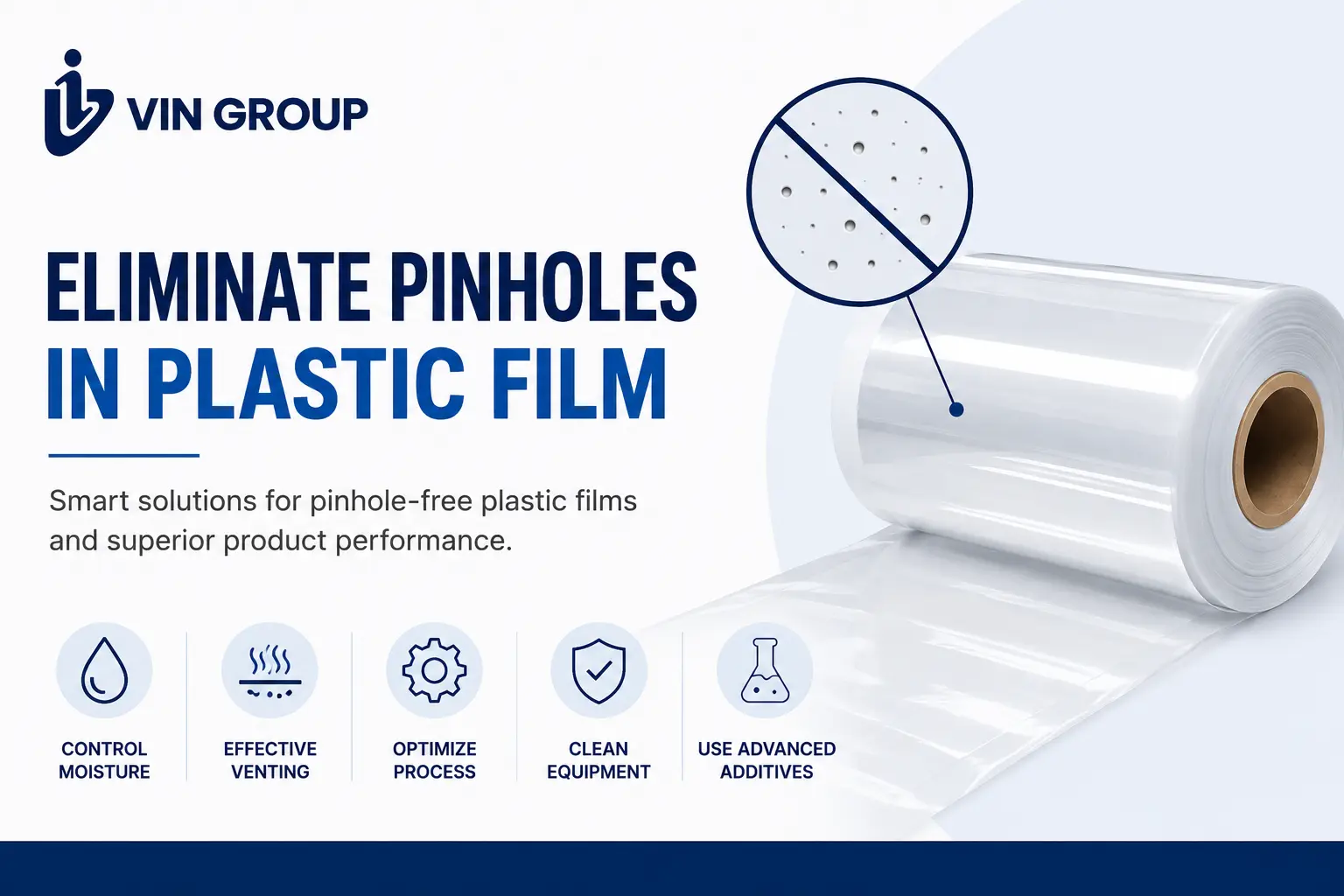
How to Eliminate Pinholes in Plastic Film: A Problem-Based Guide for Manufacturers
Pinholes in plastic film are a critical defect that can compromise product quality, barrier properties, and overall performance. Whether used in packaging, medical applications, or industrial films, even microscopic holes can lead to leakage, contamination, and product failure.
This problem-based guide explores how to eliminate pinholes in plastic film, identifies root causes, and provides practical solutions tailored for manufacturers like Vin Group. By addressing these challenges effectively, businesses can ensure consistent quality and improved operational efficiency.
Understanding the Problem: What Are Pinholes in Plastic Film?
Pinholes are tiny voids or perforations that appear on the surface or within plastic films. These defects are often invisible to the naked eye but can significantly impact functionality.
Why Pinholes Are a Serious Issue
- Reduced barrier protection
- Compromised product safety
- Increased rejection rates
- Negative impact on brand reputation
Understanding the root causes is essential to develop effective solutions.
What Causes Pinholes in Coatings?
Pinholes are commonly observed in coatings applied to plastic films. The primary causes include:
1. Trapped Air or Gas
During coating or extrusion, air can become trapped and later escape, leaving voids.
2. Moisture Contamination
Water vapor in materials or the environment leads to bubble formation, which results in pinholes.
3. Improper Viscosity
If the coating material is too thick or too thin, it can create uneven surfaces and defects.
4. Surface Contamination
Dust, oil, or residues prevent proper adhesion, causing pinholes.
5. Rapid Drying or Curing
Fast evaporation traps gases beneath the surface, leading to defects.
These factors are central to understanding What is the solution to eliminate pinholes in plastic film?
How to Get Rid of Pin Holes?
Eliminating pinholes requires a systematic approach combining material control, process optimization, and equipment maintenance.
1. Improve Material Quality
- Use high-purity raw materials
- Avoid contaminated or recycled inputs without proper treatment
2. Optimize Processing Conditions
- Maintain consistent temperature
- Control pressure and flow rates
- Avoid overheating
3. Enhance Venting Systems
Proper venting allows trapped gases to escape before film formation.
4. Control Environmental Conditions
Maintain low humidity and clean production environments.
5. Use Additives
Anti-foaming agents and surface modifiers help reduce defects.
These steps directly address How to get rid of pin holes?
How to Fix Pinholes in a Clear Coat?
Clear coatings are especially sensitive to pinhole defects.
Effective Solutions:
- Ensure proper surface preparation
- Use filtered and degassed coating materials
- Apply multiple thin layers instead of one thick coat
- Maintain controlled curing conditions
These methods ensure a smooth and defect-free finish.
How to Eliminate Pinholes in Plastic Film
This section provides a comprehensive, step-by-step solution tailored for industrial applications.
1. Raw Material Preparation
- Dry materials thoroughly to remove moisture
- Use high-quality polymers and additives
- Implement strict material inspection protocols
2. Process Optimization
- Maintain uniform temperatures profiles across extrusion zones
- Optimize screw speed and pressure
- Avoid sudden fluctuations in processing conditions
3. Advanced Venting Techniques
- Use vacuum venting systems
- Ensure vent ports are clean and functional
- Improve degassing efficiency
4. Surface and Equipment Cleanliness
- Regularly clean (machines) and dies
- Prevent contamination from dust or residues
- Use filtration systems
5. Use of Specialized Additives
- Anti-foaming agents
- Wetting agents
- Flow modifiers
These additives improve film formation and reduce defects.
6. Controlled Cooling and Drying
- Avoid rapid cooling that traps gases
- Ensure gradual and uniform drying
What Is the Solution to Eliminate Pinholes in Plastic Film?
A complete solution involves:
- High-quality raw materials
- Optimized extrusion parameters
- Effective venting systems
- Clean production environment
- Use of advanced additives
This integrated approach ensures consistent results and addresses the core problem effectively.
How Can Pinholes in Plastic Film Be Eliminated in India?
India’s manufacturing landscape presents unique challenges such as mixed raw materials and environmental conditions.
Key Strategies:
- Improve waste segregation and material quality
- Invest in advanced extrusion technologies
- Train workforce in process optimization
- Maintain controlled humidity in production areas
These steps are essential for How can pinholes in plastic film be eliminated in India?
Common Types of Pinhole Defects
Manufacturers may encounter:
- Surface pinholes
- Internal voids
- Coating-related pinholes
- Gas-induced bubbles
Each type requires specific troubleshooting methods.
Advanced Technologies for Pinhole Detection and Prevention
Modern manufacturing uses:
- Inline inspection systems
- Optical scanners
- AI-based defect detection
- Automated process control
These technologies help identify and eliminate defects in real time.
Best Practices for Long-Term Prevention
- Regular equipment maintenance
- Continuous process monitoring
- Staff training programs
- Use of high-quality additives
These practices ensure sustainable production and consistent quality.
Benefits of Eliminating Pinholes
Addressing pinhole defects offers:
- Improved product performance
- Enhanced barrier properties
- Reduced rejection rates
- Higher customer satisfaction
For Vin Group, this translates into stronger market positioning and operational excellence.
Conclusion
Eliminating pinholes in plastic film is essential for ensuring superior barrier properties, product reliability, and consistent manufacturing quality. By using high-quality raw materials, optimizing extrusion parameters, maintaining effective venting systems, implementing rigorous equipment maintenance, and adopting advanced inspection technologies, manufacturers can significantly reduce defects and improve production efficiency. A proactive approach to process control not only minimizes waste and rejection rates but also enhances overall product performance across a wide range of industrial applications.
At Vin Group, we are committed to helping manufacturers achieve defect-free plastic film production through advanced material solutions, process optimization, and quality-focused manufacturing practices. Our expertise supports the development of high-performance plastic films that meet demanding industry standards while delivering consistent, reliable, and sustainable results.
FAQs
1. What is the main cause of pinholes in plastic film?
Moisture and trapped gases are the most common causes.
2. Can pinholes be completely eliminated?
Yes, with proper material handling, process control, and equipment maintenance.
3. Are pinholes visible to the naked eye?
Not always; some require specialized detection systems.
4. Do additives help in reducing pinholes?
Yes, anti-foaming and flow additives play a key role.