
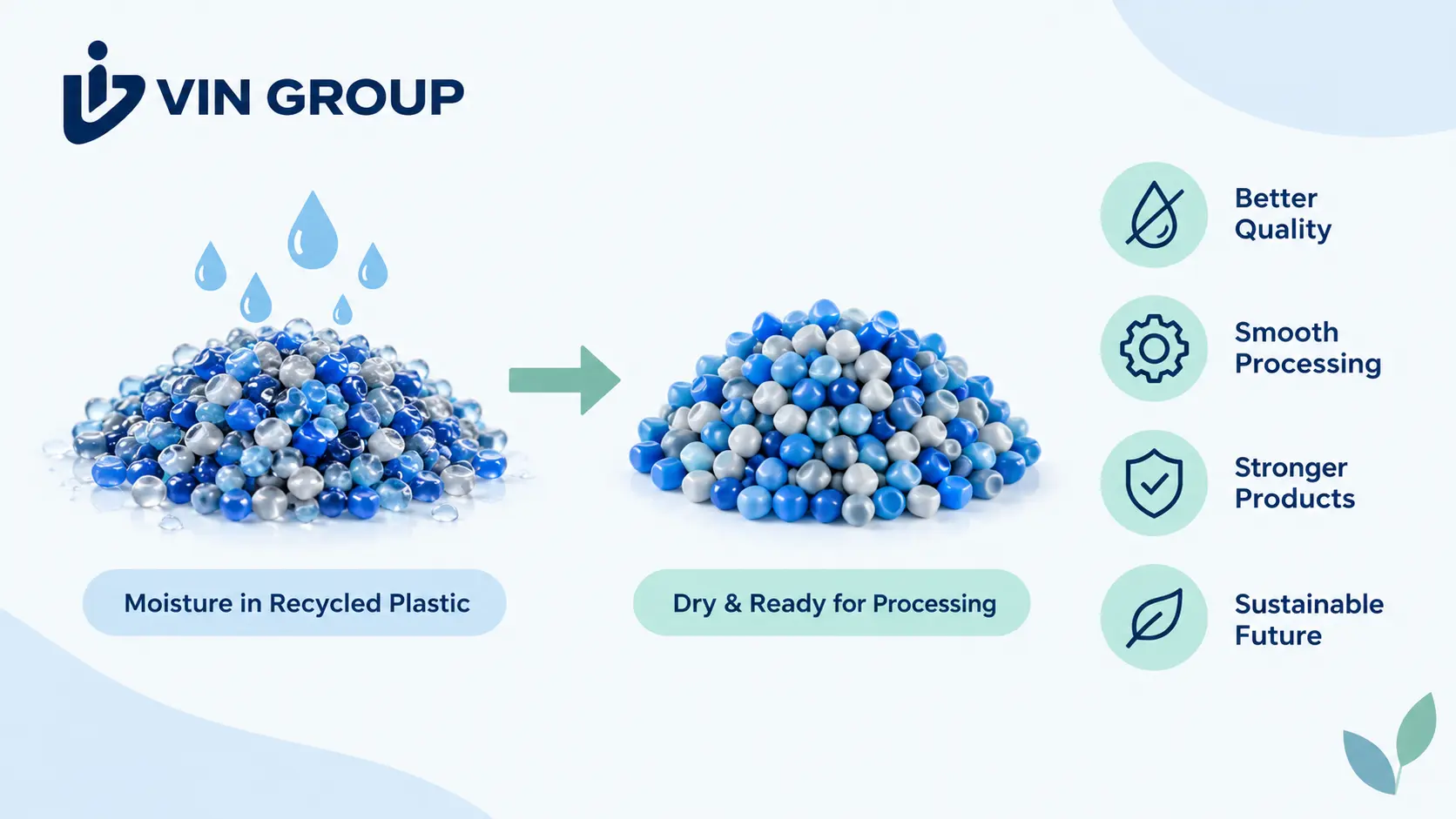
How to Reduce Moisture in Recycled Plastic?
Recycled plastic plays a major role in sustainable manufacturing, helping industries reduce waste and lower environmental impact. However, one of the most common challenges in plastic recycling is moisture contamination. Excess moisture in recycled plastic can affect processing quality, product strength, surface finish, and manufacturing efficiency.
Understanding how to reduce moisture in recycled plastic is essential for manufacturers aiming to improve production consistency and material performance. Moisture trapped in plastic granules or recycled polymers can lead to defects such as bubbles, weak bonding, poor surface finish, and structural inconsistencies.
At Vin Group, maintaining high-quality recycled plastic processing standards includes controlling moisture levels to ensure reliable and durable product outcomes.
In this guide, we will discuss moisture-related challenges in recycled plastic, effective reduction techniques, and best practices for moisture management.
Why Is Moisture a Problem in Recycled Plastic?
Moisture contamination is common in recycled plastics because materials are often exposed to humidity, water, or environmental conditions during collection, storage, and transportation.
Excess moisture may lead to:
- Surface defects
- Bubbles during molding
- Reduced mechanical strength
- Poor material consistency
- Lower product durability
Manufacturers frequently focus on how to remove moisture from plastic to improve production efficiency and final product quality.
At Vin Group, moisture management remains an important factor for maintaining reliable recycled plastic performance.
What Plastics Absorb Moisture?
A common question in polymer processing is, what plastics absorb moisture?
Certain plastics naturally absorb moisture from the surrounding environment. These are called hygroscopic plastics.
Common moisture-absorbing plastics include:
Nylon (Polyamide)
Nylon absorbs moisture easily, which may affect dimensional stability and strength.
PET (Polyethylene Terephthalate)
PET often requires drying before processing.
Polycarbonate (PC)
Polycarbonate absorbs humidity and may develop defects during manufacturing if not dried properly.
ABS (Acrylonitrile Butadiene Styrene)
ABS may absorb moisture and affect processing consistency.
Non-hygroscopic plastics absorb less moisture but may still retain surface water contamination.
Understanding moisture behavior helps manufacturers reduce defects during recycling and production.
How to Reduce Moisture in Recycled Plastic
There are several effective methods for controlling moisture in recycled polymers.
Use Dehumidifying Dryers
Industrial dehumidifiers help remove moisture before processing begins.
Dryers use controlled heat and airflow to reduce humidity in recycled materials.
Proper Storage Methods
Store recycled plastic in sealed, moisture-resistant environments.
Avoid exposing raw materials to humidity and direct weather conditions.
Material Preheating
Controlled heating helps evaporate trapped moisture before extrusion or molding.
Add Moisture-Resistant Additives
Some additives improve moisture resistance and reduce water absorption.
Maintain Low-Humidity Processing Areas
Humidity control improves material consistency and reduces contamination risks.
Manufacturers often focus on how to remove moisture from plastic granules to maintain smoother production cycles.
How to Remove Moisture from Plastic
Many manufacturers ask how to remove moisture from plastic effectively.
Several industrial methods are commonly used.
Thermal Drying
Applying controlled heat removes internal moisture from plastic materials.
Hot Air Dryers
Hot air circulation helps evaporate trapped water molecules.
Vacuum Drying
Vacuum systems improve moisture removal efficiency for sensitive materials.
Desiccant Dryers
Desiccant-based systems absorb humidity and improve material dryness.
These methods help improve recycled plastic quality while minimizing processing defects.
How to Remove Moisture from Plastic Granules
A frequently searched topic is how to remove moisture from plastic granules.
Plastic granules often absorb moisture during transportation or storage.
To reduce moisture:
Dry Granules Before Processing
Use industrial drying equipment before molding or extrusion.
Store Materials Correctly
Sealed containers reduce exposure to humid air.
Monitor Humidity Levels
Regular monitoring helps maintain material consistency.
Avoid Prolonged Outdoor Storage
Environmental moisture increases contamination risk.
At Vin Group, proper material handling supports consistent recycled plastic quality.
How to Prevent Moisture in Packaging
Manufacturers often ask how to prevent moisture in packaging to protect materials and products.
Several strategies help reduce moisture exposure.
Use Moisture Barriers
Protective packaging films help block humidity.
Add Desiccants
Moisture absorbers reduce internal humidity levels.
Improve Storage Conditions
Dry warehouses minimize moisture-related damage.
Seal Packaging Properly
Proper sealing reduces environmental exposure.
Moisture prevention becomes especially important for recycled plastic granules and sensitive materials.
Factors That Affect Moisture Absorption in Recycled Plastic
Reducing moisture begins with understanding why recycled plastic absorbs water in the first place. Several factors influence the amount of moisture present in recycled materials before processing.
Type of Polymer
Different plastics absorb moisture at different rates. Hygroscopic materials such as nylon, PET, ABS, and polycarbonate naturally absorb moisture from the surrounding air, while non-hygroscopic plastics like polypropylene (PP) and polyethylene (PE) mainly retain surface moisture rather than absorbing it internally.
Recycling and Washing Processes
Recycled plastics are often washed to remove dirt, labels, and contaminants. If the material is not dried thoroughly after washing, residual moisture can remain trapped in the flakes or pellets, leading to processing issues later.
Environmental Conditions
High humidity during storage or transportation increases the likelihood of moisture absorption. Seasonal weather changes and poorly ventilated storage facilities can also affect moisture levels in recycled plastic.
Material Form
Plastic flakes generally have a larger exposed surface area than pellets, allowing them to absorb or retain moisture more easily. This makes proper drying particularly important before processing.
Storage Duration
Even properly dried recycled plastic can absorb moisture again if it is stored for extended periods without adequate protection. Using the material within recommended storage periods helps maintain consistent quality.
Quality Checks Before Processing Recycled Plastic
Drying recycled plastic is only one part of moisture control. Performing routine quality checks before processing helps manufacturers identify potential issues before they affect production.
Some useful quality control measures include:
- Measuring moisture content using specialized moisture analyzers.
- Inspecting materials for signs of clumping or excess surface moisture.
- Verifying that drying equipment is operating at the recommended temperature and drying time.
- Checking storage conditions regularly to ensure materials remain protected from humidity.
- Following standard operating procedures for handling dried materials before they enter production.
These preventive measures help improve processing consistency, reduce material waste, and produce stronger, higher-quality finished products.
Best Practices for Long-Term Moisture Management
Long-term moisture control requires a combination of proper equipment, handling procedures, and regular quality monitoring. Manufacturers can improve recycled plastic performance by following these best practices:
- Select drying methods based on the specific polymer being processed.
- Minimize the time between drying and processing to prevent moisture reabsorption.
- Rotate stored inventory using a first-in, first-out (FIFO) system to avoid prolonged storage.
- Regularly inspect drying and storage equipment to ensure consistent performance.
- Train production teams to recognize moisture-related processing defects and respond quickly.
At Vin Group, effective moisture management is an integral part of producing high-quality recycled plastic materials that support efficient manufacturing and reliable product performance.
Conclusion
Recycling is only the first step toward sustainable plastic manufacturing, ensuring that recycled materials perform as reliably as virgin polymers is equally important. Effective moisture control allows manufacturers to maximize material value, reduce production losses, and build greater confidence in recycled plastic applications.
Vin Group supports this transition by providing high-quality recycled plastic solutions that promote efficient processing and dependable performance. Together, we help businesses move closer to a circular economy where quality and sustainability go hand in hand.