
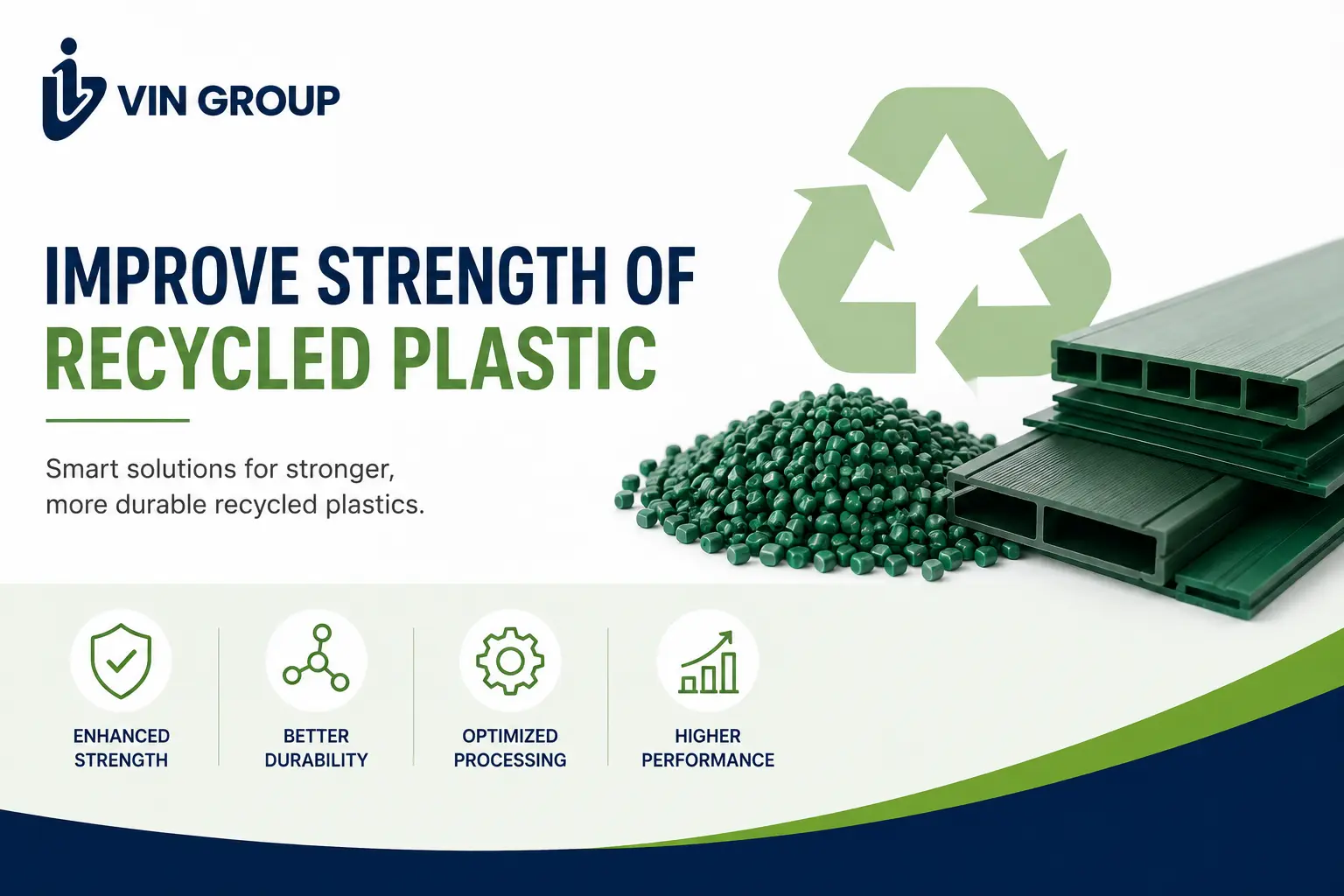
How to Improve Strength of Recycled Plastic: A Problem-Based Guide for Sustainable Manufacturing
Recycled plastics are transforming the future of sustainable manufacturing. However, one of the biggest challenges industries face is maintaining or enhancing the strength of recycled plastic materials. Compared to virgin polymers, recycled plastics often suffer from reduced mechanical properties due to degradation, contamination, and repeated processing cycles.
This problem-based guide explores how to improve strength of recycled plastic, addressing real-world industrial challenges and providing actionable solutions for applications such as construction, plastic roads, sheets, and granules. For organizations like Vin Group, improving strength is critical to delivering high-performance, sustainable products.
Understanding the Problem: Why Recycled Plastic Loses Strength
Before solving the issue, it is important to understand the root causes of strength reduction:
1. Polymer Chain Degradation
Repeated heating during recycling shortens polymer chains, reducing tensile strength and durability.
2. Contamination
Mixed materials, dirt, and additives interfere with bonding and weaken the final product.
3. Poor Compatibility
Blending different types of plastics without compatibilizers leads to weak interfacial bonding.
4. Oxidation and Thermal Damage
Exposure to oxygen and high temperatures during processing reduces mechanical properties.
These challenges highlight why a problem-based approach is essential for improving recycled plastic strength.
How to Increase the Strength of Plastic?
Improving plastic strength requires a combination of material science and process optimization:
1. Use of Reinforcing Fillers
Adding materials like glass fibers, carbon fibers, or mineral fillers enhances tensile and impact strength.
2. Incorporation of Compatibilizers
Compatibilizers improve bonding between different polymers, increasing overall strength.
3. Controlled Processing Conditions
Maintaining optimal temperature and pressure prevents degradation and ensures uniform structure.
4. Use of Stabilizers
Antioxidants and UV stabilizers protect polymers from environmental damage.
These strategies directly support How can the strength of recycled plastic material be improved?
What Is the Strength of Recycled Plastic?
The strength of recycled plastic depends on several factors:
- Type of polymer (PET, HDPE, PP, etc.)
- Number of recycling cycles
- Processing conditions
- Additives used
While recycled plastics may initially have lower strength than virgin materials, advanced techniques can significantly enhance their performance.
How to Improve Strength of Recycled Plastic
This section focuses on practical solutions to improve mechanical properties across industries.
1. Advanced Sorting and Cleaning
Removing contaminants ensures better material consistency and bonding.
2. Use of Chemical Additives
Additives such as chain extenders and impact modifiers rebuild polymer structure and improve strength.
3. Blending with Virgin Material
Combining recycled plastic with virgin polymers enhances mechanical performance.
4. Optimized Extrusion Techniques
Improved screw design and controlled processing conditions reduce degradation.
5. Nano-Enhancement Technologies
Nanomaterials like graphene and nanoclays significantly improve strength and durability.
How to Improve Impact Strength of Plastics?
Impact strength is crucial for applications exposed to stress and load.
Key Methods:
- Use of elastomer modifiers
- Addition of rubber-based additives
- Improved dispersion of fillers
- Controlled cooling processes
These techniques are essential for industries requiring high durability.
How to Improve the Recycling of Plastic?
Efficient recycling directly impacts material strength.
Best Practices:
- Implement advanced sorting technologies
- Reduce contamination at source
- Use closed-loop recycling systems
- Invest in high-quality processing equipment
Improving recycling systems ensures better raw material quality, which directly affects strength.
How Can the Strength of Recycled Plastic Sheets Be Improved?
Plastic sheets require uniform strength and flexibility.
Solutions:
- Use high-quality recycled feedstock
- Optimize extrusion parameters
- Add reinforcing fillers
- Ensure uniform thickness during production
These steps address How can the strength of recycled plastic sheets be improved?
How Can the Strength of Recycled Plastic Granules Be Improved?
Granules are the foundation of plastic manufacturing.
Improvement Techniques:
- Use pelletizing systems with controlled cooling
- Add stabilizers during granulation
- Maintain consistent particle size
- Avoid thermal degradation
These practices solve How can the strength of recycled plastic granules be improved?
How Can the Strength of Recycled Plastic Be Improved for Use in Construction?
Construction applications demand high strength and durability.
Key Approaches:
- Reinforce with fibers or mineral fillers
- Use composite materials
- Ensure proper compounding techniques
- Apply surface treatments
These methods are essential for How can the strength of recycled plastic be improved for use in construction?
How Can the Strength of Recycled Plastic in India Be Improved?
India faces unique challenges in recycling due to mixed waste streams.
Strategic Solutions:
- Improve waste collection infrastructure
- Promote awareness and segregation
- Invest in advanced recycling technologies
- Encourage industry partnerships
These steps are critical for How can the strength of recycled plastic in India be improved?
Common Challenges in Strength Enhancement
Manufacturers often face:
- Inconsistent raw materials
- High cost of additives
- Technical limitations in processing
- Lack of standardization
Overcoming these challenges requires innovation and continuous improvement.
Role of Additives in Strength Improvement
Additives play a crucial role in enhancing recycled plastic:
- Chain Extenders: Restore polymer length
- Impact Modifiers: Improve toughness
- Fillers: Increase rigidity and strength
- Stabilizers: Prevent degradation
These components are essential for achieving high-performance recycled plastics.
Benefits of Improving Recycled Plastic Strength
Enhancing strength offers multiple advantages:
- Wider application range
- Improved product durability
- Reduced material wastage
- Higher market acceptance
For Vin Group, these benefits translate into sustainable growth and competitive advantage.
Conclusion
Improving the strength of recycled plastics is essential for expanding their use in demanding industrial applications while supporting sustainable manufacturing goals. By combining advanced sorting, effective compatibilizers, reinforcing additives, optimized processing conditions, and quality control measures, manufacturers can overcome common challenges such as material degradation and inconsistent performance to produce stronger, more reliable recycled plastic products.
At Vin Group, we are committed to advancing recycled polymer technology through innovative material solutions and process optimization. Our expertise helps manufacturers improve the strength, durability, and consistency of recycled plastics, enabling the production of high-performance products that support a more sustainable and circular manufacturing future.
FAQs
1. What reduces the strength of recycled plastic?
Polymer degradation, contamination, and repeated processing cycles.
2. Can recycled plastic be as strong as virgin plastic?
Yes, with proper additives and processing techniques.
3. What additives improve plastic strength?
Chain extenders, fillers, and impact modifiers.