
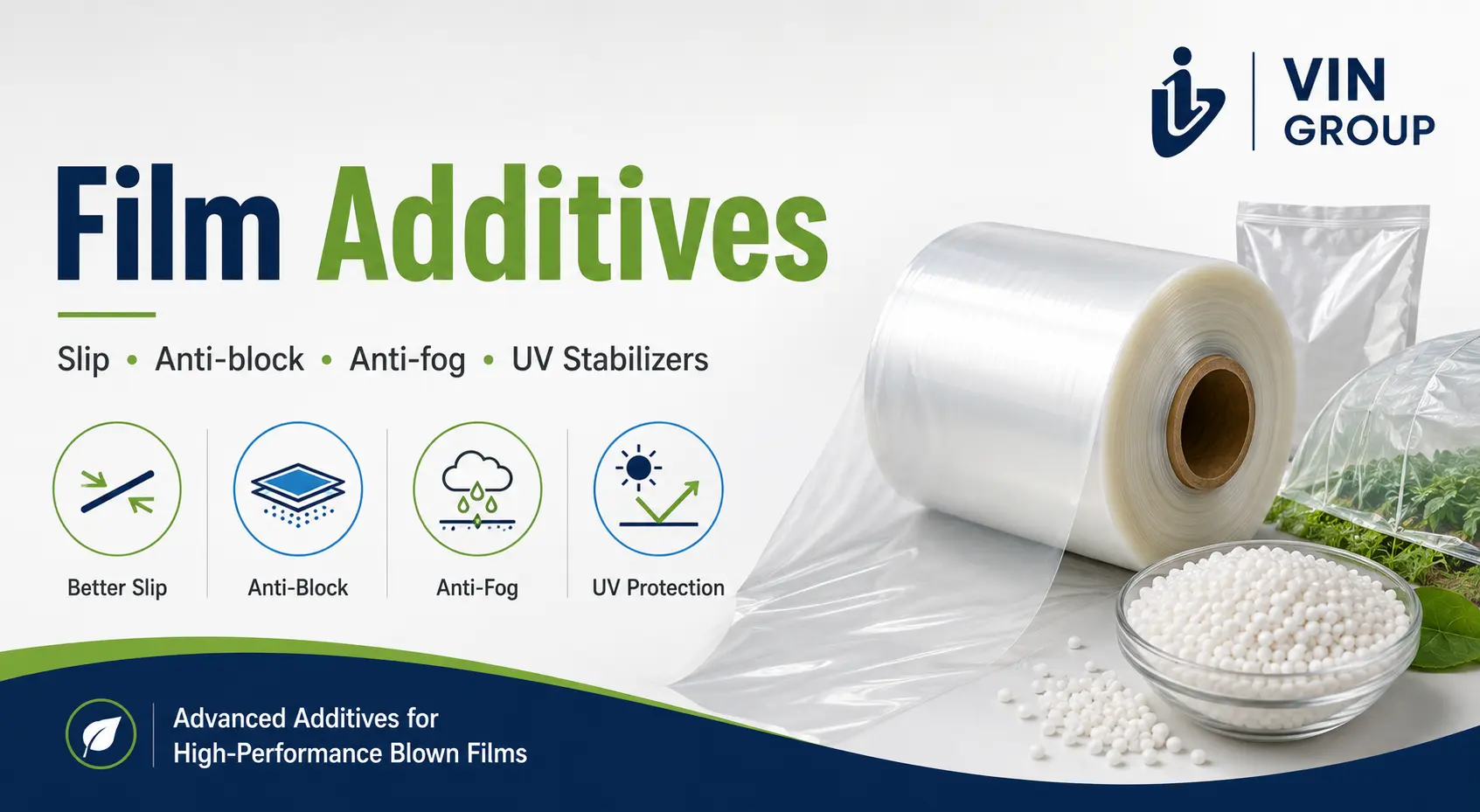
Best Slip, Anti-block, Anti-fog & UV Additives for Blown Film Applications
Blown films are widely used across industries for packaging food, pharmaceuticals, consumer goods, agriculture, and industrial products. While the choice of polymer is essential, the final performance of the film largely depends on selecting the right Film Additives. Additives enhance processing, improve surface properties, increase durability, and ensure that the film performs reliably throughout its intended application.
From preventing film layers from sticking together to improving transparency, reducing condensation, and protecting against UV degradation, modern additive technologies play a critical role in blown film production. Manufacturers often combine multiple additive systems to achieve the desired balance of processing efficiency, product appearance, and long-term performance.
This guide explains how slip, anti-block, anti-fog, and UV additives improve blown film performance and how manufacturers can choose the right formulation for specific applications.
Why Are Film Additives Important?
Blown films must meet demanding requirements for strength, clarity, processability, and durability. During production and end use, films may experience friction, blocking, sunlight exposure, moisture, and varying temperatures. Without suitable Film Additives, these conditions can reduce product quality and processing efficiency.
The right additive package helps manufacturers:
- Improve film handling
- Reduce blocking
- Increase slip performance
- Improve optical clarity
- Minimise fog formation
- Enhance UV resistance
- Improve processing efficiency
- Extend product lifespan
- Maintain consistent product quality
By selecting the appropriate blown film additives, manufacturers can optimise both production performance and the functionality of the finished film.
Key Types of Film Additives
1. Slip Additives
Slip additives reduce the coefficient of friction between film surfaces, allowing rolls to unwind smoothly and improving handling during packaging operations.
Common benefits of slip additives for blown film include:
- Easier film unwinding
- Improved machine speed
- Reduced friction
- Better bag opening
- Improved packaging efficiency
Slip additives are commonly incorporated into packaging films, shopping bags, agricultural films, and industrial packaging.
2. Anti-block Additives
Freshly produced plastic films often stick together due to their smooth surfaces. Anti-block additives create microscopic surface roughness that reduces the contact area between adjacent film layers.
Benefits include:
- Easier film separation
- Improved roll handling
- Reduced blocking
- Better processing efficiency
- Consistent packaging performance
These additives are particularly important for multilayer packaging films and high-speed converting operations.
3. Anti-fog Additives
Moisture condensation inside transparent packaging can reduce product visibility and negatively affect shelf appeal.
Anti-fog additives reduce water droplet formation by encouraging moisture to spread into a thin, transparent layer across the film surface.
Advantages include:
- Improved product visibility
- Better transparency
- Reduced condensation
- Enhanced food presentation
- Longer shelf appeal
They are widely used in food packaging, greenhouse films, fresh produce packaging, and refrigerated products.
4. UV Stabilizers
Many films are exposed to prolonged sunlight during outdoor use.
UV stabilizers for plastic films protect polymers from ultraviolet degradation, helping maintain mechanical strength and appearance over extended periods.
Benefits include:
- Improved weather resistance
- Longer outdoor life
- Better colour stability
- Reduced brittleness
- Improved mechanical performance
These additives are commonly used in agricultural films, greenhouse covers, geomembranes, construction films, and outdoor packaging.
5. Processing Aids and Masterbatches
Processing additives improve polymer flow, dispersion, and extrusion stability during film manufacturing.
A properly selected blown film masterbatch can combine colourants, processing aids, UV stabilizers, slip agents, or anti-block additives into a single, easy-to-use formulation.
Similarly, film extrusion additives help improve melt stability, surface quality, output, and overall production efficiency.
Choosing the Right Film Additives
Selecting the appropriate Film Additives depends on several technical and application-specific factors.
Understand the End Application
Different films require different performance characteristics.
For example:
- Food packaging requires anti-fog performance and excellent clarity.
- Agricultural films require strong UV protection.
- Industrial packaging often prioritises slip and anti-block performance.
- Stretch and shrink films require balanced processing characteristics.
The additive package should always align with the intended end use.
Consider the Base Polymer
Different polyethylene film additives are selected depending on whether the film is produced from LDPE, LLDPE, HDPE, or multilayer polyethylene structures.
Proper additive compatibility ensures uniform dispersion, stable processing, and consistent product quality.
Evaluate Processing Conditions
Extrusion temperature, cooling conditions, film thickness, line speed, and multilayer construction all influence additive performance.
Selecting additives compatible with production equipment helps improve processing efficiency while reducing production defects.
Balance Performance and Cost
Rather than maximising additive loading, manufacturers should optimise slip agents, anti-block additives, anti-fog additives, UV stabilizers, and processing aids together to achieve the desired balance between product performance, processing efficiency, and production cost.
Benefits of Using the Right Film Additives
Selecting the right Film Additives improves both manufacturing efficiency and the performance of finished blown films.
Key benefits include:
- Improved film handling
- Reduced blocking between film layers
- Lower surface friction
- Better transparency and appearance
- Reduced condensation
- Enhanced UV resistance
- Improved extrusion efficiency
- Longer product service life
- Better packaging performance
- Consistent product quality
These advantages help manufacturers produce films that meet the performance expectations of packaging, agricultural, and industrial applications.
Can Anti-fog Additives Be Used in Any Film?
Anti-fog additives are highly effective, but they are not suitable for every film application.
They are primarily used in transparent packaging where moisture condensation can reduce product visibility, such as fresh produce packaging, refrigerated food packaging, greenhouse films, and food trays. Their effectiveness depends on the polymer type, film structure, processing conditions, and the environment in which the film will be used. Manufacturers should select anti-fog formulations specifically designed for the intended application to achieve consistent performance.
Do These Additives Negatively Affect the Clarity of the Film?
When selected and dosed correctly, most modern Film Additives have little or no negative impact on film clarity.
High-quality slip, anti-block, and anti-fog additives are designed to maintain optical properties while improving functionality. However, excessive additive loading or poor dispersion may reduce transparency, increase haze, or affect surface appearance. Proper formulation and processing are therefore essential for achieving both excellent clarity and performance.
Conclusion
Selecting the right Film Additives is essential for producing high-quality blown films that deliver reliable performance throughout manufacturing and end use. Slip additives improve handling, anti-block additives prevent film sticking, anti-fog additives maintain product visibility, and UV stabilizers protect films from sunlight degradation. Together with processing aids and masterbatch solutions, these additives help manufacturers improve production efficiency, maintain excellent film quality, and extend product lifespan.
At Vin Group, we provide advanced additive solutions for the blown film industry, helping manufacturers optimise processing and achieve consistent product performance. Our portfolio includes blown film additives, slip additives, anti-block additives, anti-fog additives, UV stabilizers, and customised blown film masterbatch solutions developed for a wide range of packaging and industrial applications. With strong technical expertise and a commitment to quality, Vin Group partners with customers to develop formulations that improve efficiency, product reliability, and long-term performance.
FAQs
1. What are Film Additives?
Film Additives are materials added to polymers during blown film production to improve processing, surface properties, durability, clarity, UV resistance, and packaging performance.
2. Why are slip additives used in blown film?
Slip additives for blown film reduce surface friction, making films easier to unwind, handle, process, and package on high-speed production lines.
3. What do anti-block additives do?
Anti-block additives reduce the tendency of film layers to stick together by creating microscopic surface roughness, improving film separation and roll handling.
4. Where are anti-fog additives commonly used?
Anti-fog additives are widely used in food packaging, fresh produce films, refrigerated packaging, greenhouse films, and other transparent applications where condensation control is important.
5. Why are UV stabilizers important for plastic films?
UV stabilizers for plastic films protect polymers from ultraviolet degradation, helping maintain strength, flexibility, colour, and long-term outdoor performance.
6. What is a blown film masterbatch?
A blown film masterbatch is a concentrated additive formulation that provides consistent dispersion of slip agents, anti-block additives, UV stabilizers, pigments, or other performance additives during film extrusion.
7. What are polyethylene film additives?
Polyethylene film additives are specialised additives used with LDPE, LLDPE, and HDPE films to improve processing, surface characteristics, weather resistance, and mechanical performance.
8. How do film extrusion additives improve production?
Film extrusion additives improve melt flow, extrusion stability, additive dispersion, surface quality, processing efficiency, and the overall consistency of blown film manufacturing.