
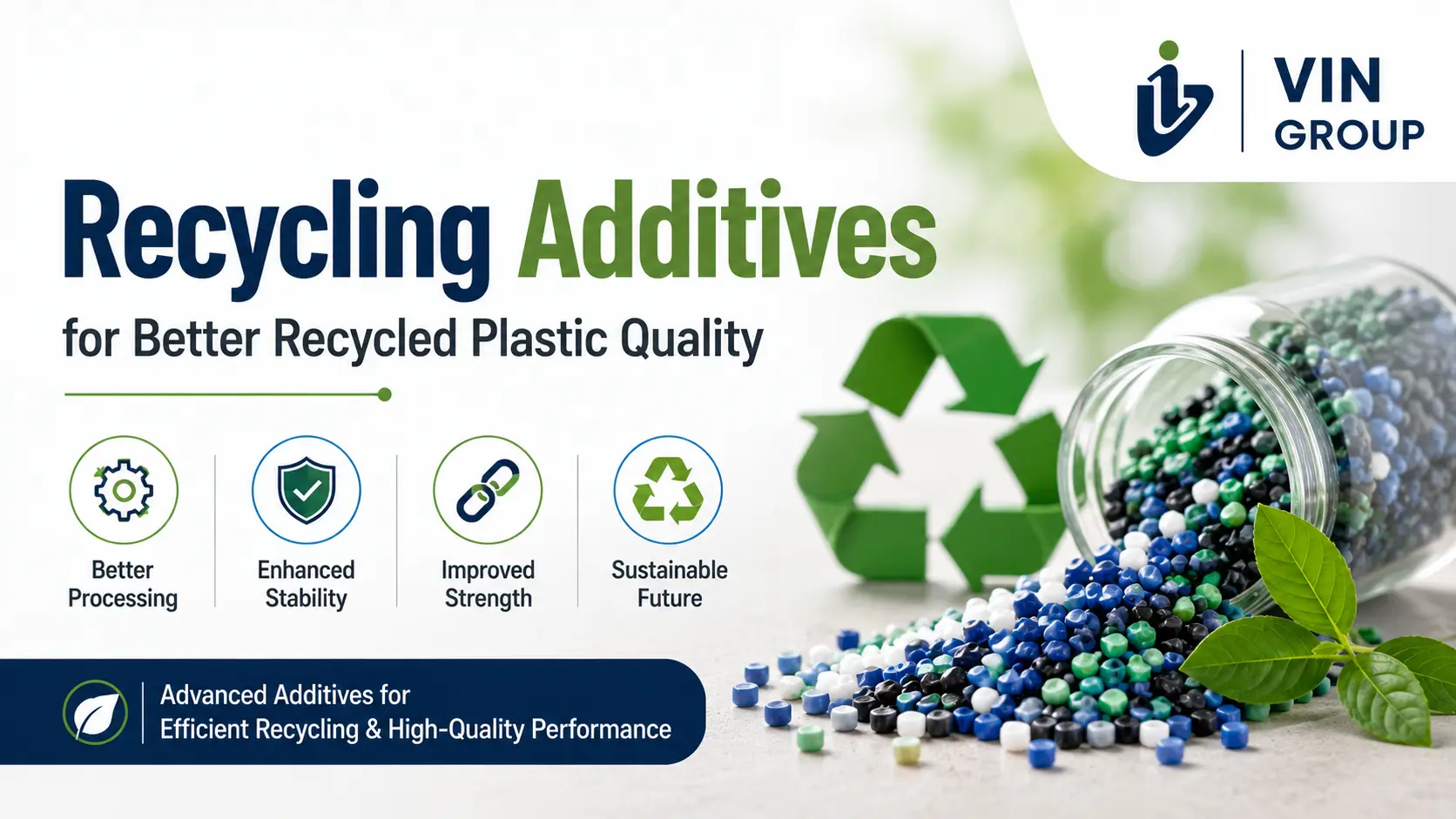
Plastic Additives and Their Importance in Recycled Materials
The growing demand for sustainable manufacturing has made recycled plastics an essential part of the global polymer industry. From packaging and automotive components to construction materials and consumer products, manufacturers are increasingly incorporating recycled polymers into their production processes. However, recycled plastics often experience thermal degradation, contamination, reduced mechanical strength, and inconsistent processing due to repeated melting and reprocessing. This is where Recycling Additives play a vital role.
Modern Recycling Additives help restore polymer performance, improve processability, enhance durability, and maintain product quality throughout multiple recycling cycles. Processing aids, stabilizers, antioxidants, and compatibilizers allow manufacturers to produce recycled plastic products that meet demanding performance and quality standards while supporting circular economy initiatives.
This guide explains how processing aids and stabilizers improve recycled plastic quality, the different types of additives used in recycling, and how manufacturers can select the right additive package.
Why Are Recycling Additives Important?
Every recycling cycle exposes plastics to heat, oxygen, moisture, and mechanical stress. These conditions gradually reduce molecular weight, making polymers more difficult to process and lowering their mechanical performance.
Properly selected Recycling Additives help manufacturers:
- Improve processing efficiency
- Restore polymer stability
- Reduce thermal degradation
- Improve mechanical strength
- Enhance melt flow consistency
- Extend product lifespan
- Improve colour stability
- Increase production efficiency
- Support sustainable manufacturing
Using high-quality recycled plastic additives enables manufacturers to improve the value and usability of recycled materials across a wide range of applications.
Common Types of Recycling Additives
1. Processing Aids
One of the most important processing aids for recycled plastics improves polymer flow during extrusion, injection moulding, and compounding.
These additives help:
- Improve melt flow
- Increase extrusion efficiency
- Reduce processing defects
- Improve surface finish
- Lower energy consumption
- Enhance production consistency
Processing aids are particularly valuable when recycled polymers contain contaminants or have reduced melt strength after multiple processing cycles.
2. Stabilizers
Repeated heating causes oxidation and molecular degradation, reducing polymer performance.
Stabilizers for recycled plastics help protect polymers from further degradation during processing and throughout the product’s service life.
Benefits include:
- Improved thermal stability
- Better colour retention
- Enhanced long-term durability
- Improved mechanical properties
- Increased resistance to oxidation
Modern polymer stabilizers often combine heat stabilizers and antioxidants to maximise protection during recycling.
3. Antioxidants
Antioxidants reduce oxidative degradation that occurs during repeated melt processing.
Their primary functions include:
- Protecting polymer chains
- Maintaining molecular weight
- Improving heat ageing resistance
- Extending product lifespan
They are commonly used alongside stabilizers to provide comprehensive protection for recycled polymers.
4. Compatibilizers
Many recycled plastic streams contain mixed polymers that naturally exhibit poor compatibility.
Recycled polymer additives such as compatibilizers improve bonding between different polymer phases, leading to:
- Better dispersion
- Improved mechanical strength
- Increased impact resistance
- Enhanced processing stability
- Reduced phase separation
Compatibilizers are particularly valuable when recycling mixed polyolefin streams or multilayer plastic waste.
5. Chain Extenders
Chain extenders help rebuild polymer molecular weight that may have been reduced during repeated recycling.
Benefits include:
- Improved melt strength
- Better processing stability
- Enhanced mechanical performance
- Improved dimensional stability
They are widely used for engineering plastics and polyester recycling applications.
How Recycling Additives Improve Recycled Plastic Quality
The primary objective of Recycling Additives is to restore the performance of recycled materials as closely as possible to virgin polymers.
Key improvements include:
Better Processing Stability
Processing aids improve melt flow, reduce viscosity fluctuations, and support smoother production.
Improved Mechanical Properties
Stabilizers and compatibilizers help maintain tensile strength, impact resistance, and flexibility.
Enhanced Thermal Stability
Stabilizers protect polymers during repeated extrusion and moulding operations.
Better Appearance
Additives reduce colour variation, improve surface finish, and minimise defects.
Increased Product Consistency
Proper additive formulations allow manufacturers to produce recycled materials with predictable processing characteristics and reliable quality.
Choosing the Right Recycling Additives
Selecting suitable Recycling Additives requires careful evaluation of the recycled material and its intended application.
Understand the Recycled Feedstock
Different polymers degrade differently during recycling. Polyethylene, polypropylene, PET, PVC, and engineering plastics each require specialised additive systems.
Evaluate Processing Conditions
Extrusion temperature, processing speed, residence time, and contamination levels influence additive performance. Proper formulation ensures consistent processing while reducing degradation.
Define Performance Requirements
Manufacturers should consider the final application’s mechanical, thermal, and environmental requirements before selecting additives.
Balance Cost and Performance
Rather than increasing additive loading unnecessarily, manufacturers should optimise processing aids, stabilizers, antioxidants, and compatibilizers together to achieve cost-effective recycled plastic quality improvement while maintaining production efficiency.
What Are Plastic Processing Aids?
Plastic processing aids are additives that improve the flow and processability of polymers during manufacturing. In recycling applications, they help compensate for the reduced melt strength and inconsistent flow characteristics often found in recycled materials.
Common functions of processing aids for recycled plastics include:
- Improving melt flow
- Enhancing extrusion stability
- Reducing die build-up
- Improving surface finish
- Increasing production output
- Reducing processing defects
By improving material flow, processing aids enable manufacturers to process recycled polymers more efficiently while producing parts with consistent quality.
How to Improve Plastic Recycling?
Improving plastic recycling requires a combination of better waste collection, effective sorting, advanced recycling technologies, and the use of high-performance plastic recycling additives.
Manufacturers can improve recycled plastic processing by:
- Using clean and properly sorted feedstock
- Removing contaminants before processing
- Selecting compatible polymer blends
- Adding stabilizers and antioxidants to reduce degradation
- Using processing aids to improve melt flow
- Applying compatibilizers for mixed plastic streams
- Optimising extrusion and moulding parameters
Together, these practices help increase recycled material quality, improve production efficiency, and support long-term sustainability goals.
What Are the Additives for Improving the Quality of Recycled Products?
Several additives for recycled polymers are used to restore performance and improve product quality.
The most common include:
- Processing aids
- Heat stabilizers
- Antioxidants
- Compatibilizers
- Chain extenders
- UV stabilizers
- Impact modifiers
- Colour masterbatches
These recycled polymer additives improve mechanical properties, thermal stability, appearance, and processing consistency while extending the service life of recycled plastic products.
Benefits of Using Recycling Additives
A balanced additive package provides significant advantages throughout the recycling process.
Key benefits include:
- Improved processing efficiency
- Better thermal and oxidative stability
- Enhanced mechanical performance
- Consistent melt flow
- Improved colour retention
- Reduced production defects
- Higher-quality finished products
- Increased use of recycled content
- Better long-term durability
- Support for circular economy initiatives
These benefits make Recycling Additives an essential part of modern plastic recycling and sustainable manufacturing.
Conclusion
As industries continue to increase the use of recycled plastics, maintaining material performance has become more important than ever. Recycling Additives help overcome many of the challenges associated with recycled polymers by improving processing, restoring stability, enhancing mechanical properties, and extending product life. Processing aids, stabilizers, antioxidants, compatibilizers, and other specialised additives allow manufacturers to produce recycled plastic products with greater consistency, reliability, and performance.
At Vin Group, we provide advanced additive solutions designed to improve every stage of recycled plastic manufacturing. Our portfolio includes high-performance recycled plastic additives, processing aids for recycled plastics, stabilizers for recycled plastics, and other recycled polymer additives that help manufacturers optimise production and enhance product quality. With strong technical expertise and a commitment to innovation, Vin Group partners with customers to develop customised solutions that support efficient recycled plastic processing, improve sustainability, and deliver long-lasting value.
FAQs
1. What are Recycling Additives?
Recycling Additives are specialised materials added during plastic recycling to improve processing, restore polymer properties, reduce degradation, and enhance the quality of recycled plastic products.
2. Why are recycled plastic additives important?
Recycled plastic additives improve melt flow, thermal stability, mechanical strength, and processing consistency, helping manufacturers produce higher-quality recycled materials.
3. What are the most common processing aids for recycled plastics?
Processing aids for recycled plastics improve extrusion, melt flow, surface finish, production efficiency, and dimensional consistency during recycling and manufacturing.
4. What do stabilizers for recycled plastics do?
Stabilizers for recycled plastics protect polymers from heat and oxidation during repeated processing, helping maintain strength, colour, and long-term durability.
5. How do polymer stabilizers improve recycled plastic quality?
Polymer stabilizers reduce thermal degradation, improve oxidation resistance, preserve molecular weight, and support consistent processing across multiple recycling cycles.
6. What are recycled polymer additives?
Recycled polymer additives include processing aids, stabilizers, antioxidants, compatibilizers, chain extenders, and impact modifiers that restore polymer performance and improve recycled material quality.
7. How can manufacturers achieve recycled plastic quality improvement?
Recycled plastic quality improvement can be achieved through proper sorting, contamination control, optimised processing conditions, and the use of suitable additive formulations.
8. Which additives are commonly used for recycled polymers?
Common additives for recycled polymers include processing aids, stabilizers, antioxidants, compatibilizers, UV stabilizers, chain extenders, and impact modifiers selected according to the polymer type and application.