
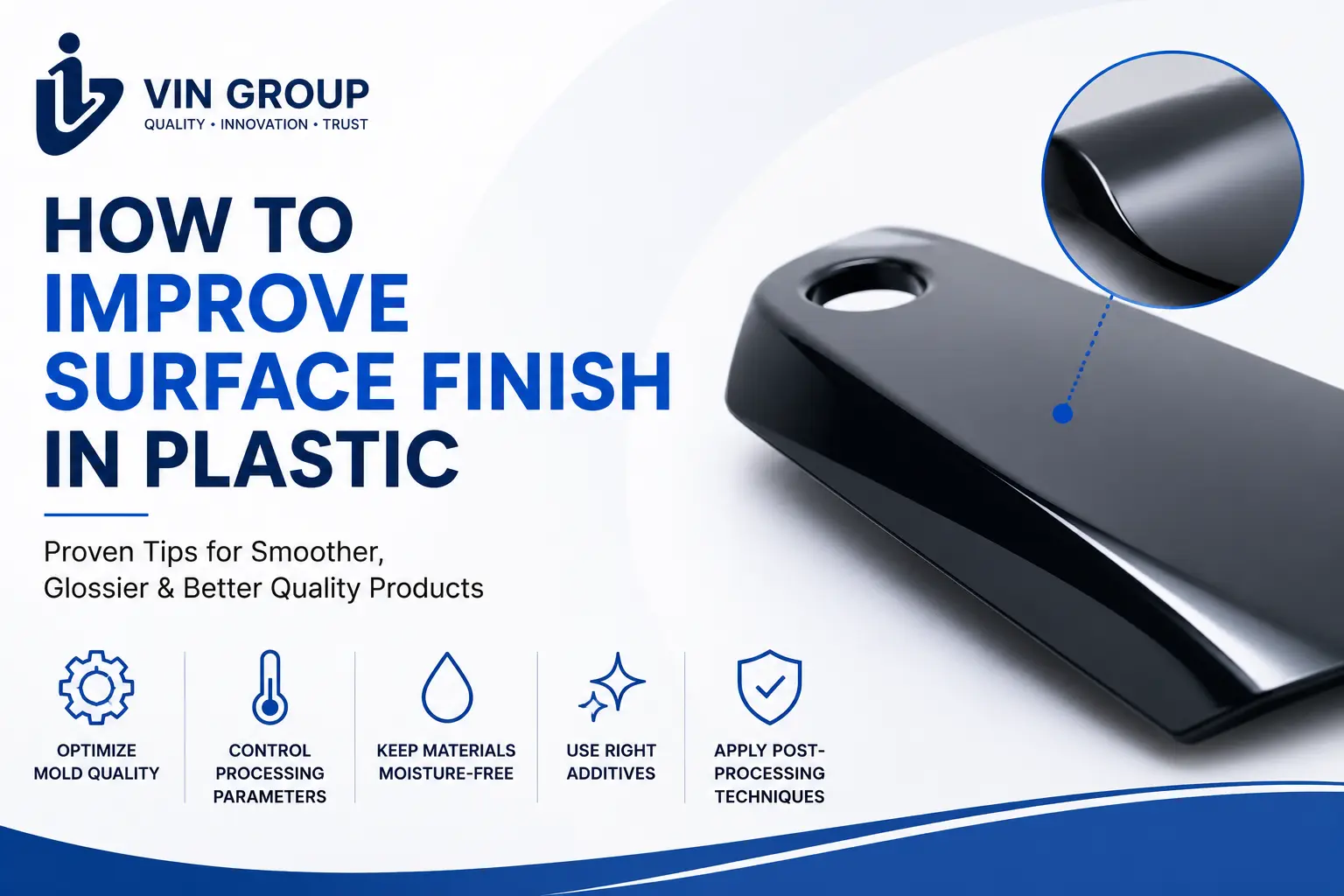
How to Improve Surface Finish in Plastic
Surface finish plays a major role in the appearance, durability, and functionality of plastic products. Whether used in automotive components, consumer goods, packaging, or industrial applications, achieving a smooth and high-quality finish enhances both product value and performance. Poor surface finishing can lead to visible defects, rough textures, and reduced customer satisfaction.
Understanding how to improve surface finish in plastic is essential for manufacturers aiming to produce premium-quality products while maintaining consistency during processing. At Vin Group, maintaining superior plastic quality standards involves focusing on every stage of production, including surface finish optimization.
In this guide, we will discuss effective techniques to improve plastic surface finish, increase gloss, and achieve smoother, shinier plastic products.
Why is Surface Finish Important in Plastic Manufacturing?
Surface finish directly affects both the functionality and visual appeal of plastic products. A properly finished plastic component looks more refined, performs better, and offers improved durability.
A poor surface finish may lead to:
- Rough textures
- Visible marks and scratches
- Reduced gloss
- Lower product durability
- Customer dissatisfaction
For manufacturers, maintaining proper finishing standards is critical for ensuring product quality and long-term reliability.
Additionally, industries often refer to a plastic surface finish chart to determine the desired texture, roughness, and finishing standards for specific applications.
Common Causes of Poor Plastic Surface Finish
Before learning how to improve surface finish, it is important to understand the factors that may negatively impact it.
Poor Mold Quality
The quality of the mold surface significantly influences the final appearance of plastic parts. Imperfections in molds often transfer directly to the finished product.
Incorrect Processing Temperature
Improper temperatures during molding can result in flow marks, rough textures, or dull finishes.
Excess Moisture in Raw Materials
Moisture trapped in plastic materials may create bubbles or uneven surfaces.
Inadequate Cooling
Improper cooling techniques may lead to warping and inconsistent surface texture.
Poor Material Selection
Some plastic grades naturally produce smoother finishes than others, making material selection an important factor.
At Vin Group, ensuring proper processing conditions helps maintain consistent surface quality throughout production.
How to Improve Surface Finish in Plastic
There are several proven techniques manufacturers use to enhance plastic surface quality.
Optimize Mold Surface Quality
The mold finish directly impacts the final plastic surface. Polished molds generally produce smoother and glossier parts.
Using high-quality molds with proper maintenance can significantly improve product appearance.
Control Processing Parameters
Maintaining proper injection speed, pressure, and temperature helps achieve smoother plastic surfaces.
Stable processing conditions reduce defects such as:
- Flow lines
- Sink marks
- Surface irregularities
Remove Moisture Before Processing
Drying plastic materials before manufacturing helps prevent defects caused by trapped moisture.
Moisture-free materials contribute to better consistency and a cleaner surface finish.
Choose the Right Additives
Special additives can improve flow characteristics and enhance the overall finish of plastic products.
Certain additives also help improve gloss and scratch resistance.
Use Post-Processing Techniques
Polishing, buffing, coating, and flame treatment can improve the visual appearance of finished products.
These methods are especially useful for premium-quality plastic applications.
How to Increase Surface Finish?
Improving surface finish requires a combination of proper manufacturing techniques and finishing processes.
Here are some effective ways to increase surface finish:
Improve Mold Polishing
A smoother mold surface produces smoother plastic components.
Optimize Injection Molding Settings
Correct temperature and pressure settings help plastic flow evenly through molds, minimizing defects.
Select Premium Raw Materials
Higher-quality plastic resins generally provide improved finishing outcomes.
Apply Surface Treatments
Techniques such as polishing, sanding, or coating can enhance texture and appearance.
Maintain Consistent Cooling
Uniform cooling prevents surface inconsistencies and helps improve overall quality.
By controlling these factors, manufacturers can consistently achieve superior product finishing.
How to Get Glossy Finish on Plastic?
Many industries prefer glossy plastic surfaces for aesthetic and branding purposes. Learning how to get glossy finish on plastic can help improve product appeal and perceived value.
Use Polished Molds
Highly polished molds create smoother and shinier surfaces during production.
Increase Mold Temperature
Higher mold temperatures often improve material flow and surface smoothness.
Add Gloss Enhancers
Specialized additives can improve shine and surface smoothness.
Apply Protective Coatings
Gloss coatings enhance visual appeal while protecting plastic surfaces from scratches.
Use Proper Material Grades
Some polymers naturally provide higher gloss levels than others.
At Vin Group, selecting suitable processing methods helps maintain premium-quality finishes across plastic applications.
How to Buff Plastic to a Shine?
Buffing is one of the most effective post-processing techniques for improving plastic appearance.
If you are wondering how to buff plastic to a shine, follow these methods:
Clean the Surface First
Remove dust, oil, or dirt before beginning the buffing process.
Use Fine Sandpaper
For rough surfaces, fine sanding helps eliminate imperfections.
Apply Plastic Polish
Plastic polishing compounds restore smoothness and improve shine.
Buff with a Soft Cloth or Machine
Microfiber cloths or buffing wheels help produce a polished finish.
Avoid Excessive Pressure
Applying too much pressure may scratch or damage the plastic.
Proper buffing techniques help restore dull plastic surfaces and create a professional finish.
How to Increase Gloss in Plastic?
Gloss plays an important role in improving the visual quality of plastic products. Manufacturers often focus on techniques that help increase gloss in plastic for better aesthetics.
Improve Material Flow
Smooth material flow reduces rough textures and enhances shine.
Use Gloss-Enhancing Additives
Certain additives improve reflectivity and surface smoothness.
Optimize Mold Design
High-quality mold surfaces contribute to improved gloss levels.
Reduce Surface Defects
Minimizing scratches, moisture defects, and irregularities improves overall appearance.
Apply Finishing Treatments
Coatings and polishing methods can significantly increase gloss.
For premium plastic applications, gloss enhancement often becomes an important quality factor.
Understanding Plastic Surface Finish Standards
Maintaining consistent surface quality requires proper measurement and standardization.
A plastic surface finish chart helps manufacturers determine acceptable texture levels based on roughness measurements and application requirements.
Similarly, injection molding surface finish standards are widely used to maintain consistency in molded plastic products.
These standards help manufacturers classify finishes into categories such as:
Matte Finish
Provides a non-reflective appearance and works well for industrial products.
Semi-Gloss Finish
Offers a balanced appearance with moderate reflectivity.
High Gloss Finish
Creates premium-looking products with superior shine.
Following proper injection molding surface finish standards ensures better product consistency and customer satisfaction.
Best Practices for Better Plastic Surface Finish
To consistently improve plastic surface quality, manufacturers should follow these best practices:
Maintain Equipment Regularly
Well-maintained equipment minimizes production defects.
Use High-Quality Raw Materials
Premium materials improve consistency and appearance.
Monitor Production Parameters
Maintaining stable temperature and pressure settings reduces imperfections.
Avoid Moisture Contamination
Dry plastic materials before processing to prevent surface defects.
Invest in Mold Maintenance
Regular mold cleaning and polishing improve product finishing.
At Vin Group, maintaining strict quality control measures helps ensure reliable and high-performance plastic processing.
Future Trends in Plastic Surface Finishing
As manufacturing technologies continue to evolve, new surface finishing methods are improving efficiency and aesthetics.
Emerging trends include:
- Advanced coating technologies
- Laser surface finishing
- Eco-friendly polishing methods
- Smart mold technology
- Automated finishing systems
These advancements help manufacturers achieve smoother finishes with greater consistency.
Conclusion
Achieving an excellent surface finish requires the right combination of quality materials, optimized processing conditions, and effective finishing techniques. By focusing on every stage of production, manufacturers can enhance product appearance, improve durability, reduce defects, and deliver consistent results that meet customer expectations.
At Vin Group, we are dedicated to helping manufacturers achieve superior plastic surface finishes with high-quality materials and industry-leading expertise. Whether you’re looking to improve gloss, optimize processing, or enhance overall product quality, our reliable plastic solutions are designed to support efficient production and long-lasting performance.