
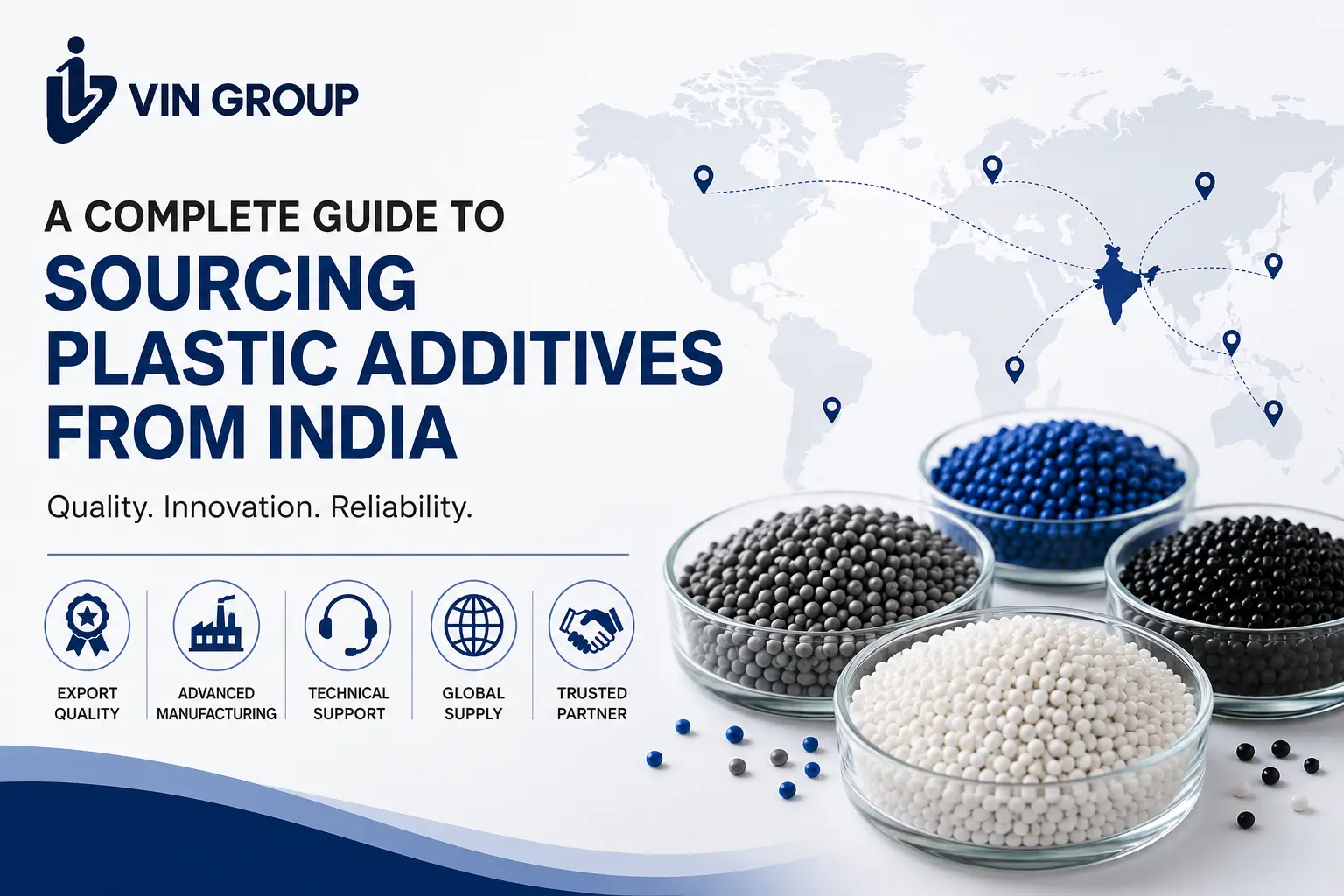
A Complete Guide to Sourcing Plastic Additives from India
India has become one of the world’s leading manufacturing destinations for polymer additives, serving customers across Asia, Europe, the Middle East, Africa, and the Americas. Competitive manufacturing costs, a well-developed chemical industry, skilled technical expertise, and strong export infrastructure have made the country an attractive sourcing destination for global buyers. However, selecting the right plastic additives exporter India requires more than comparing product prices.
International buyers must evaluate product quality, manufacturing capabilities, regulatory compliance, documentation, supply chain reliability, and technical support before choosing a supplier. A dependable partner can help improve production efficiency, ensure consistent product quality, and minimise risks associated with international sourcing.
This guide explains how global buyers can source plastic additives from India while ensuring quality, export reliability, and long-term business success.
Why Source Plastic Additives from India?
India has developed a strong reputation as a reliable manufacturing hub for polymer additives and specialty chemicals.
Choosing a trusted plastic additives exporter India offers several advantages:
- Competitive manufacturing costs
- Advanced production capabilities
- Skilled technical expertise
- Large manufacturing capacity
- Strong export network
- Wide product portfolio
- Custom formulation capabilities
- Reliable global logistics
- Technical customer support
These advantages have encouraged manufacturers worldwide to source a wide range of additive solutions from India.
What Should Global Buyers Look for?
Finding the right supplier requires evaluating multiple business and technical factors.
1. Manufacturing Experience
A reputable plastic additives manufacturer India should have extensive experience in polymer processing, formulation development, and international exports.
Experienced manufacturers understand:
- Global quality requirements
- Export regulations
- Industry-specific standards
- Product application requirements
- Customer-specific formulations
Their expertise helps minimise sourcing risks while improving product consistency.
2. Product Portfolio
Leading suppliers should offer a comprehensive range of products, including:
- Heat stabilizers
- UV stabilizers
- Processing aids
- Flame retardants
- Coupling agents
- Impact modifiers
- Antioxidants
- Lubricants
- Colour masterbatches
- Functional masterbatches
Working with a reliable polymer additives supplier India simplifies procurement by allowing buyers to source multiple additive solutions from a single manufacturer.
3. Manufacturing Infrastructure
Production capability directly influences product quality and delivery reliability.
Evaluate whether the supplier has:
- Modern manufacturing facilities
- Automated production systems
- In-house testing laboratories
- Batch traceability
- Strong quality assurance procedures
- Efficient warehousing
- Export-ready packaging systems
These capabilities help ensure consistent production and dependable international deliveries.
4. Technical Support
The best suppliers provide much more than products.
A professional polymer additives exporter should offer:
- Application guidance
- Material selection support
- Formulation development
- Processing recommendations
- Product troubleshooting
- Technical documentation
Strong technical collaboration often improves manufacturing efficiency while reducing production costs.
Product Quality Matters
Consistent product quality is essential when sourcing additives internationally.
Buyers should verify:
- Raw material consistency
- Batch-to-batch quality
- Laboratory testing
- Traceability systems
- Product certifications
- Technical documentation
Reliable export quality plastic additives reduce production variability while improving finished product performance.
Importance of Custom Formulations
Every manufacturing process has different processing conditions and performance requirements.
An experienced Indian plastic additives manufacturer should be capable of developing customised formulations that address:
- Polymer compatibility
- Processing conditions
- Mechanical performance
- Weather resistance
- Regulatory compliance
- Customer-specific applications
Custom formulations often improve processing efficiency while reducing overall production costs.
Applications of Plastic Additives
Modern manufacturers use additives across numerous industries.
Common applications include:
Plastic Compounding Additives
High-quality plastic compounding additives improve polymer processing, filler dispersion, mechanical strength, thermal stability, and long-term durability in customised compounds.
Specialty Polymer Additives
Advanced specialty polymer additives are designed for demanding applications requiring improved UV resistance, flame retardancy, impact strength, chemical resistance, or weatherability.
These products are widely used in automotive, construction, electrical, packaging, agriculture, healthcare, and industrial manufacturing.
Building Long-Term Supplier Relationships
International sourcing should focus on long-term partnerships rather than short-term purchasing decisions.
Reliable suppliers consistently provide:
- Stable product quality
- Technical assistance
- Timely communication
- On-time deliveries
- Continuous product improvement
- Supply chain flexibility
Strong partnerships reduce operational risks while supporting sustainable business growth.
How to Evaluate Export Readiness
Before finalising a supplier, buyers should evaluate:
- Export experience
- International customer base
- Production capacity
- Logistics capabilities
- Packaging quality
- Documentation systems
- Technical support
- Quality assurance procedures
A supplier with proven export experience is better equipped to manage international shipping requirements while maintaining product integrity throughout the supply chain.
What Are the Common Export Documentation Requirements?
International buyers should ensure that every shipment is supported by complete and accurate documentation. Proper export documentation helps prevent customs delays, ensures regulatory compliance, and facilitates smooth international trade.
Depending on the product and destination country, common export documents and certifications include:
- Commercial Invoice
- Packing List
- Bill of Lading (B/L) or Air Waybill (AWB)
- Certificate of Origin (COO), where required
- Certificate of Analysis (COA)
- Technical Data Sheet (TDS)
- Safety Data Sheet (SDS/MSDS)
- REACH Compliance Declaration (where applicable)
- RoHS Compliance Certificate (where applicable)
- ISO 9001 Certification
- Food Contact Compliance Declaration (FDA, EU, or other applicable regulations, if required)
- Product Specification Sheet
- Insurance Certificate (where applicable)
- Fumigation Certificate (if applicable for packaging)
- Import permits or regulatory declarations required by the destination country
- Any country-specific compliance certificates requested by the buyer or local authorities
A reliable plastic additives exporter in India should provide complete, accurate, and timely documentation to support efficient customs clearance, regulatory compliance, and end-to-end product traceability.
What Specific Quality Control Measures Should I Enforce?
Maintaining consistent quality is one of the most important aspects of international sourcing.
Global buyers should request suppliers to implement:
- Incoming raw material inspection
- Batch-to-batch quality testing
- In-process quality monitoring
- Finished product laboratory testing
- Batch traceability systems
- Standard operating procedures (SOPs)
- Product retention samples
- Regular calibration of testing equipment
For plastic additives for export, buyers should also review product specifications, technical documentation, and quality certificates before approving commercial shipments.
How Do I Verify the Reliability and Compliance of Indian Suppliers?
Before selecting an Indian plastic additives manufacturer, buyers should conduct a structured evaluation.
Key verification methods include:
- Reviewing company experience and export history
- Evaluating manufacturing infrastructure
- Checking quality management systems
- Requesting product samples for testing
- Reviewing customer references
- Assessing technical support capabilities
- Confirming documentation procedures
- Conducting supplier audits where practical
It is also beneficial to assess the supplier’s communication, responsiveness, and ability to support long-term business relationships.
Which Regions Are the Primary Manufacturing Hubs for Plastic Additives in India?
India has a strong network of chemical and polymer manufacturing clusters that support the production, innovation, and export of plastic additives. These hubs offer excellent industrial infrastructure, access to raw materials, skilled technical talent, well-connected logistics networks, and proximity to major ports.
Major plastic additives manufacturing hubs in India include:
- Gujarat (Ahmedabad, Vadodara, Bharuch, Ankleshwar, Vapi)
- Maharashtra (Mumbai, Navi Mumbai, Pune, Nagpur)
- Delhi NCR (Noida, Greater Noida, Faridabad, Gurugram)
- Rajasthan (Bhiwadi, Neemrana)
- Tamil Nadu (Chennai, Hosur, Coimbatore)
- Karnataka (Bengaluru, Mysuru)
- Telangana (Hyderabad)
- Andhra Pradesh (Visakhapatnam)
- Madhya Pradesh (Pithampur, Indore)
- Punjab (Ludhiana)
- Haryana (Panipat, Sonipat)
- Uttar Pradesh (Kanpur, Noida, Greater Noida)
- West Bengal (Kolkata, Haldia)
- Odisha (Paradeep)
- Kerala (Kochi)
These regions are home to a wide range of manufacturers producing polymer additives, specialty chemicals, masterbatches, and plastic processing aids. Their established industrial ecosystems and strong domestic and international supply chains make them key centres for serving customers across India and global export markets.
Conclusion
Selecting the right plastic additives exporter India requires careful evaluation of product quality, manufacturing capability, export experience, technical expertise, and supply chain reliability. Buyers should prioritise suppliers that offer consistent quality, comprehensive documentation, customised formulations, modern manufacturing infrastructure, and dependable customer support. Building long-term relationships with experienced suppliers helps reduce sourcing risks while ensuring consistent product performance and uninterrupted supply.
At Vin Group, we are committed to supporting global customers with reliable additive solutions that meet international quality expectations. As an experienced plastic additives manufacturer India and trusted polymer additives supplier India, we offer a broad portfolio of plastic additives for export, plastic compounding additives, and specialty polymer additives developed for diverse industrial applications. Backed by advanced manufacturing, stringent quality control, export-ready documentation, and dedicated technical support, Vin Group partners with customers worldwide to deliver customised solutions that improve product performance, streamline manufacturing, and ensure reliable global supply.
FAQs
1. Why choose a plastic additives exporter India?
A reliable plastic additives exporter India offers competitive pricing, consistent quality, export expertise, customised formulations, and dependable global supply for plastic manufacturers.
2. How do I select the best plastic additives manufacturer India?
Choose a plastic additives manufacturer India with proven manufacturing experience, strong quality systems, export capabilities, technical support, and comprehensive product documentation.
3. What products does a polymer additives supplier India offer?
A polymer additives supplier India typically supplies stabilizers, processing aids, flame retardants, coupling agents, antioxidants, impact modifiers, lubricants, and masterbatch solutions.
4. What are export quality plastic additives?
Export quality plastic additives are products manufactured under strict quality control systems, supported by technical documentation, and designed to meet international customer requirements.
5. Why are plastic compounding additives important?
Plastic compounding additives improve processing efficiency, filler dispersion, mechanical performance, thermal stability, and the long-term durability of customised polymer compounds.
6. What are specialty polymer additives?
Specialty polymer additives are advanced formulations developed to provide enhanced UV resistance, flame retardancy, impact strength, weatherability, or other application-specific performance improvements.
7. How can I verify an Indian plastic additives manufacturer?
Review the company’s production capabilities, certifications, export history, laboratory testing, customer references, quality documentation, and technical support before placing commercial orders.
8. Why is long-term partnership important with a polymer additives exporter?
Working with a dependable polymer additives exporter helps ensure consistent quality, reliable deliveries, technical collaboration, and stable supply chains for long-term manufacturing success.