
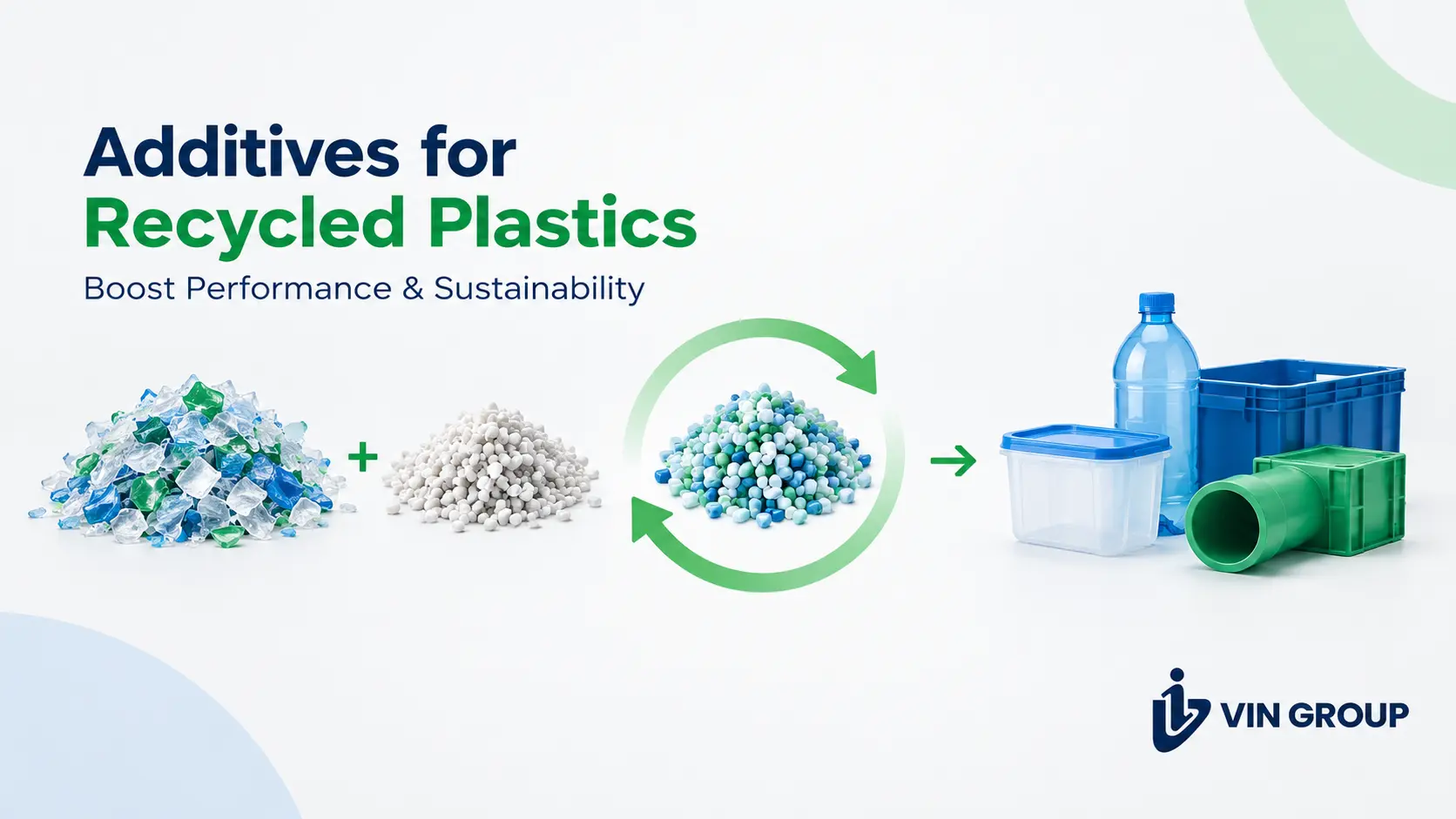
Additive for Recycled Plastic Manufacturer: Boosting Performance and Sustainability
The global push toward a circular economy has increased the demand for recycled plastics across packaging, automotive, construction, consumer goods, agriculture, and industrial applications. While recycled polymers help reduce dependence on virgin plastics, manufacturers often face challenges such as inconsistent quality, moisture contamination, degraded mechanical properties, color variation, odor issues, and processing difficulties.
This is where the right additive for recycled plastic manufacturers becomes essential. Modern additives can help restore lost properties, improve processability, enhance durability, and increase the value of recycled materials. Rather than treating additives as optional components, many recyclers now view them as critical tools for producing high-quality recycled plastic products that can compete with virgin materials.
In this guide, we’ll explore the most important recycled plastic additives, how they improve performance, their cost implications, and how manufacturers can select the best additive solutions for their recycling operations.
Why Recycled Plastics Need Specialized Additives
During collection, sorting, washing, grinding, and reprocessing, plastics are exposed to heat, moisture, oxygen, contamination, and mechanical stress. These factors can degrade polymer chains and affect final product performance.
Common challenges include:
- Reduced impact strength
- Lower tensile properties
- Melt flow inconsistencies
- Moisture-related defects
- Color variations
- Odor retention
- Surface imperfections
- Reduced thermal stability
According to industry experts, additives play a major role in restoring or enhancing recycled material performance while helping manufacturers meet application-specific requirements.
As recycling rates continue to increase globally, the demand for advanced plastic recycling additives is expected to grow significantly.
What Types of Additives Are Available for Recycled Plastic Manufacturing?
A wide variety of additives are used depending on the polymer type, contamination level, processing method, and end-use application.
1. Processing Aids
Processing aids improve polymer flow, extrusion stability, dispersion, and production efficiency.
Benefits include:
- Improved melt flow
- Better dispersion of fillers
- Reduced machine wear
- Higher production output
- Improved surface finish
For manufacturers using mixed or low-quality recycled feedstock, processing aids can significantly improve manufacturing consistency.
These recycled polymer additives are commonly used in:
- Film extrusion
- Injection molding
- Blow molding
- Pipe extrusion
- Sheet production
2. Moisture Absorbers and Desiccant Additives
Moisture is one of the biggest challenges in recycled plastics.
Residual moisture can cause:
- Voids
- Pinholes
- Surface defects
- Bubble formation
- Reduced strength
Desiccant masterbatches and moisture-absorbing additives help remove moisture during processing.
Vin Group’s Dessica and MoistGran product lines are designed specifically to address moisture-related challenges in reclaimed and recycled polymers.
These solutions are widely used in:
- Recycled LDPE
- Recycled HDPE
- PP regrind
- Mixed plastic waste streams
Such recycled plastic additive solutions help improve both productivity and product quality.
3. Impact Modifiers
Repeated thermal processing often reduces polymer toughness.
Impact modifiers help restore:
- Impact resistance
- Flexibility
- Durability
- Crack resistance
They are particularly useful in:
- Automotive parts
- Pipes
- Construction materials
- Consumer goods
Manufacturers seeking enhancing recycled plastic performance often use impact modifiers to upgrade lower-grade recyclates into higher-value products.
4. Compatibilizers
Mixed plastic streams frequently contain incompatible polymers.
Compatibilizers improve bonding between different polymer phases.
Benefits include:
- Better mechanical strength
- Improved dispersion
- Enhanced processability
- Increased recycled content utilization
These additives are especially valuable in mixed-polymer recycling systems.
5. Stabilizers
Recycled plastics often suffer from thermal and oxidative degradation.
Stabilizers help protect polymers during processing and service life.
Common options include:
- Heat stabilizers
- Antioxidants
- UV stabilizers
- Light stabilizers
These plastic additive for recycling solutions help extend product lifespan while reducing performance loss.
6. Odor Control Additives
Post-consumer recycled plastics may retain unwanted odors from previous applications.
Odor-control additives can:
- Neutralize odors
- Improve product acceptance
- Enhance consumer appeal
These additives are becoming increasingly important for packaging and consumer-product applications.
7. Color Masterbatches
Color consistency can be difficult to achieve with recycled feedstock.
Color additives help:
- Improve appearance
- Standardize product color
- Increase market value
They are widely used in packaging, furniture, and consumer products.
How Do Additives Improve the Performance of Recycled Plastics?
The primary objective of an additive for recycled plastics is to bridge the performance gap between recycled and virgin materials.
Improved Mechanical Properties
Additives can improve:
- Tensile strength
- Impact resistance
- Flexibility
- Elongation
This enables recycled plastics to be used in more demanding applications.
Better Processing Performance
Many recyclers struggle with:
- Poor melt flow
- Inconsistent extrusion
- Surface defects
Processing additives help stabilize manufacturing operations and improve production efficiency.
Enhanced Product Quality
Proper additive selection can improve:
- Surface finish
- Gloss
- Clarity
- Appearance
These improvements make recycled materials more attractive to end users.
Higher Recycled Content
Advanced additives enable manufacturers to use higher percentages of recycled material while maintaining performance targets.
This supports sustainability goals and circular-economy initiatives.
What Are the Cost Implications of Using Additives in Recycled Plastic Production?
Some manufacturers initially view additives as an additional expense.
However, the true evaluation should focus on total production economics.
Direct Costs
Additives increase formulation cost through:
- Material purchase
- Inventory management
- Quality control
However, these costs often represent only a small percentage of total production costs.
Cost Savings
Well-selected additives can reduce:
- Production rejects
- Downtime
- Material waste
- Processing inefficiencies
This often results in substantial savings.
Higher Product Value
Improved product quality allows manufacturers to:
- Enter premium markets
- Increase recycled content
- Improve customer acceptance
The resulting revenue gains can significantly outweigh additive costs.
Reduced Virgin Resin Dependency
Additives can make lower-cost recycled materials perform more like virgin polymers.
This helps reduce raw material expenses and improve profitability.
In many cases, an effective additive for recycled plastic production delivers a positive return on investment.
Which Additives Are Best Suited for High-Temperature Recycled Plastic Applications?
High-temperature processing presents unique challenges because recycled polymers are more susceptible to thermal degradation.
Heat Stabilizers
Heat stabilizers help protect polymers during:
- Extrusion
- Injection molding
- Blow molding
They minimize degradation caused by prolonged heat exposure.
Antioxidants
Antioxidants prevent oxidation during processing and product use.
Benefits include:
- Improved thermal stability
- Longer service life
- Better mechanical retention
Processing Aids
High-temperature applications often benefit from processing aids that improve melt flow and reduce shear stress.
Compatibilizers
For recycled engineering plastics, compatibilizers help maintain performance at elevated temperatures.
Manufacturers should select additives according to:
- Polymer type
- Processing temperature
- End-use requirements
- Recycled content levels
How Do Additives Affect the Recyclability and Environmental Impact of Recycled Plastics?
Sustainability concerns often raise questions about whether additives make plastics harder to recycle.
The answer depends largely on additive selection and dosage.
Positive Environmental Effects
Many additives support sustainability by:
- Increasing recycled content
- Extending product life
- Reducing waste
- Improving resource efficiency
These benefits often outweigh the environmental footprint of the additive itself.
Supporting Circularity
Modern recycled plastic additive suppliers increasingly develop products that are compatible with recycling systems.
The goal is to maintain recyclability while improving performance.
Reduced Material Consumption
By enhancing polymer properties, additives can enable:
- Thinner products
- Higher recycled content
- Reduced virgin resin usage
This contributes to overall sustainability objectives.
Responsible Additive Selection
Manufacturers should work with experienced plastic additive manufacturers that understand both performance and recyclability requirements.
Selecting additives that support circular-economy goals helps ensure long-term environmental benefits.
Key Factors When Choosing Recycled Plastic Additives
Before selecting an additive package, manufacturers should evaluate:
Polymer Type
Different additives perform differently in:
- PE
- PP
- PET
- PVC
- Engineering plastics
Feedstock Quality
Higher contamination levels often require more robust additive solutions.
Processing Method
Additive requirements vary for:
- Extrusion
- Injection molding
- Blow molding
- Rotomolding
End-Use Application
Performance requirements determine additive selection.
Applications may prioritize:
- Strength
- Flexibility
- Weather resistance
- Appearance
- Food-contact compliance
Regulatory Requirements
Certain applications require compliance with industry-specific standards.
Industry Trends Driving Demand for Recycled Plastic Additives
Several market trends are accelerating demand for advanced additive technologies:
Increased Recycled Content Targets
Brands and manufacturers are setting aggressive recycled-content goals.
Circular Economy Initiatives
Governments worldwide are promoting recycling and resource efficiency.
Higher Quality Expectations
Customers increasingly expect recycled products to perform like virgin materials.
Advanced Recycling Technologies
New recycling systems require specialized additive packages to maximize performance.
These trends continue to create opportunities for innovative recycled plastic additive solutions.
How Vin Group Supports Recycled Plastic Manufacturers
Since 1997, Vin Group has been helping plastic processors improve productivity, performance, and sustainability through advanced additive technologies.
The company offers a broad portfolio of additives designed for:
- Plastic recycling
- Film manufacturing
- Injection molding
- Pipe extrusion
- Compounding
- Rotomolding
Vin Group’s solutions include:
- Moisture management additives
- Desiccant masterbatches
- Processing aids
- Performance enhancers
- Polymer modification solutions
Products such as MoistGran and Dessica help manufacturers address moisture-related defects in recycled polymers, while Vin Group’s processing additives improve melt flow, productivity, and finished-product quality.
Supported by in-house R&D and technical expertise, Vin Group works closely with customers to develop customized additive solutions tailored to specific recycled plastic applications.
Whether your goal is improving product performance, increasing recycled content, or reducing production costs, Vin Group provides practical additive technologies that help manufacturers achieve sustainable growth.
Conclusion
The right additive for recycled plastic manufacturer can significantly improve processing efficiency, product quality, and sustainability outcomes. From moisture absorbers and processing aids to impact modifiers, compatibilizers, stabilizers, and odor-control solutions, modern additives help recyclers overcome the limitations traditionally associated with recycled plastics.
As demand for circular materials continues to grow, manufacturers must focus on producing recycled products that match the performance expectations of virgin polymers. Carefully selected recycled plastic additives enable higher recycled content, improved mechanical properties, lower production costs, and better environmental performance.
Vin Group supports this transition through innovative additive technologies, customized solutions, and technical expertise designed specifically for the evolving needs of recycled plastic manufacturers.
FAQs
1. What is the best additive for recycled plastic manufacturers?
The best additive depends on the application. Common options include processing aids, moisture absorbers, impact modifiers, stabilizers, and compatibilizers.
2. How do recycled plastic additives improve performance?
Recycled plastic additives improve melt flow, strength, durability, impact resistance, surface quality, and processing stability.
3. Are additives necessary for recycled plastic production?
Not always, but they often help overcome quality and processing issues associated with recycled polymers, especially in demanding applications.
4. Which additive is best for moisture control in recycled plastics?
Desiccant masterbatches and moisture-absorbing additives are commonly used to remove residual moisture and prevent defects during processing.
5. Can additives increase recycled content levels?
Yes. Many plastic recycling additives allow manufacturers to use higher percentages of recycled material while maintaining performance requirements.
6. Do additives affect recyclability?
Most modern additives are designed to support recyclability while improving product performance. Proper additive selection is important.
7. What additives are used in high-temperature recycled plastic applications?
Heat stabilizers, antioxidants, compatibilizers, and processing aids are commonly used in high-temperature processing environments.
8. Why should manufacturers work with experienced recycled plastic additive suppliers?
Experienced recycled plastic additive suppliers can recommend application-specific solutions, optimize formulations, and help manufacturers improve both performance and sustainability.