
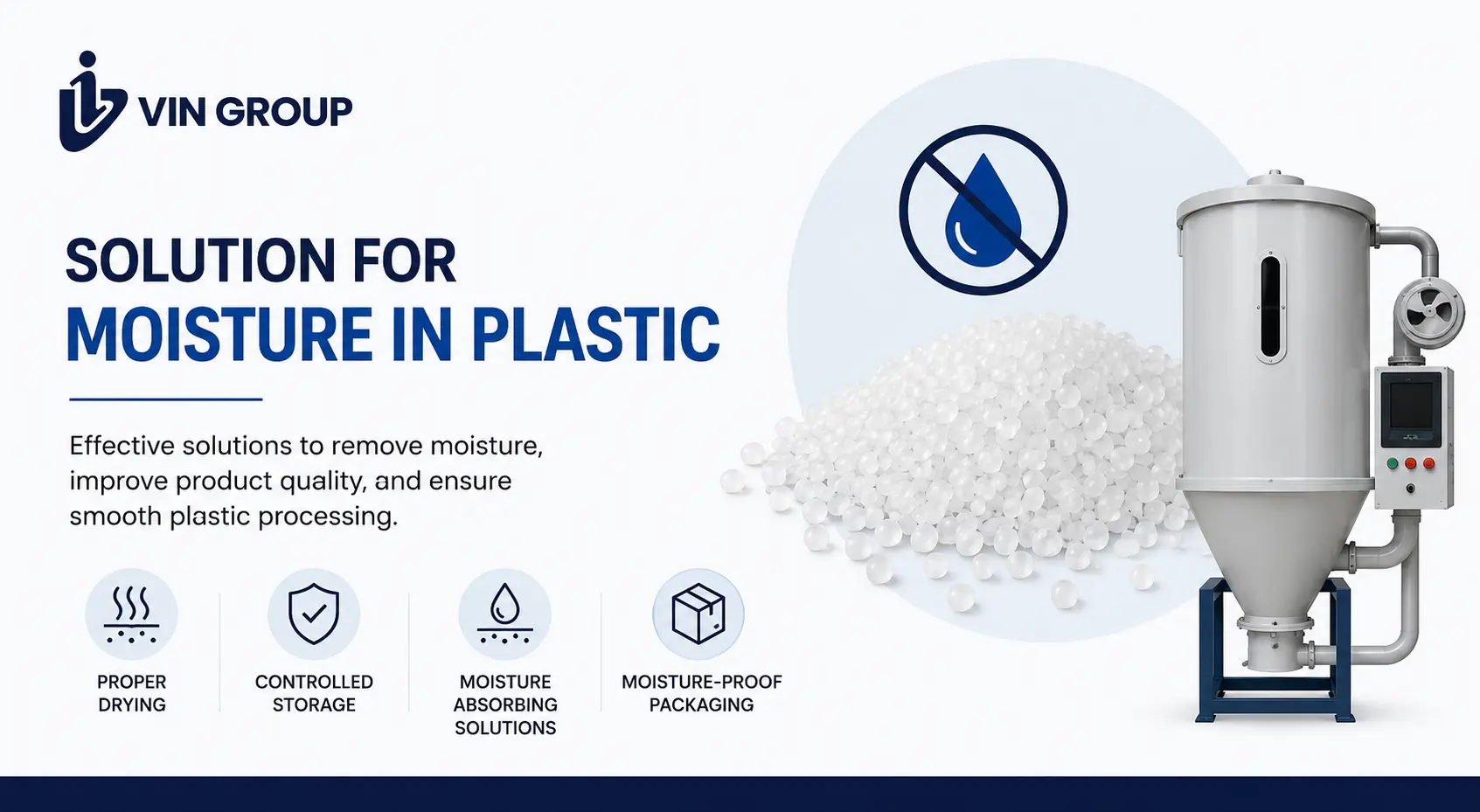
Solution for Moisture in Plastic
Introduction
Moisture contamination is one of the most common challenges in plastic processing and manufacturing. Excess moisture in raw materials can negatively affect product quality, cause processing defects, reduce mechanical strength, and create surface imperfections. Whether it occurs during storage, transportation, or manufacturing, moisture in plastics can lead to production inefficiencies and product failures.
For manufacturers, identifying the right solution for moisture in plastic is essential to ensure consistent product quality and smooth processing performance. In industries dealing with extrusion, injection molding, and polymer compounding, controlling moisture becomes even more important.
At Vin Group, maintaining high-quality plastic processing standards involves understanding moisture-related challenges and implementing effective prevention strategies. This blog explores the causes of moisture contamination, effective solutions, and practical ways to prevent moisture issues in plastic materials.
Understanding Moisture in Plastic Material
Before solving moisture-related issues, it is important to understand moisture in plastic material and how it affects manufacturing.
Plastic raw materials often absorb moisture from the surrounding environment during storage and transportation. Hygroscopic materials, such as nylon, PET, polycarbonate, and ABS, are particularly vulnerable because they absorb water molecules from the air.
Excess moisture can cause several manufacturing defects, including:
- Surface defects and poor finish
- Gas bubbles and voids
- Reduced mechanical strength
- Flow inconsistencies
- Silver streaks in injection molding
- Material degradation
Controlling moisture in plastics is essential for maintaining production consistency and preventing quality issues.
Common Causes of Moisture in Plastics
Several factors contribute to moisture in plastics, especially during industrial processing.
Improper Storage Conditions
Raw materials exposed to humidity can absorb moisture quickly.
Improperly sealed bags and poorly maintained storage facilities increase moisture contamination.
Environmental Humidity
Plastic granules stored in humid environments absorb atmospheric moisture over time.
Poor Drying Practices
Inadequate drying before processing can leave residual moisture in materials.
Transportation and Handling
Exposure to varying temperatures and humidity during logistics can increase moisture absorption.
Manufacturers must identify these causes to implement the correct solution for moisture in plastic.
What Is the Solution for Moisture?
A frequently searched question is: What is the solution for moisture?
The most effective solution depends on the source and severity of moisture contamination.
Proper Material Drying
Drying is one of the best methods to reduce moisture in plastic materials.
Industrial dryers help remove absorbed moisture before processing.
Common drying systems include:
- Hopper Dryers
- Dehumidifying Dryers
- Vacuum Dryers
- Desiccant Dryers
Proper drying temperatures and timing improve product quality significantly.
Controlled Storage Systems
Moisture-resistant storage containers help prevent contamination.
Plastic granules should be stored in sealed and low-humidity environments.
Moisture Absorbing Additives
Manufacturers sometimes use anti-moisture additives or desiccant masterbatches to reduce moisture during processing.
At Vin Group, understanding material-specific moisture control methods helps improve manufacturing efficiency and product consistency.
What to Use to Reduce Moisture?
Another important question is: What to use to reduce moisture?
Different materials and applications require different moisture reduction solutions.
Desiccant Dryers
Desiccant dryers are widely used to remove moisture from plastic granules before production.
They are particularly useful for hygroscopic materials.
Moisture Absorbing Powders
Anti-moisture powders can help reduce residual moisture in plastic manufacturing.
Desiccant Masterbatch
This material helps absorb moisture during processing and reduces moisture-related defects.
Proper Packaging
Sealed moisture-proof packaging prevents raw materials from absorbing humidity.
Choosing the right method depends on the type of polymer and production requirements.
How to Remove Moisture From Plastic?
Many manufacturers search for how to remove moisture from plastic because moisture contamination can reduce product performance.
The process generally includes:
Step 1: Identify Moisture-Sensitive Materials
Determine whether the polymer absorbs moisture easily.
Materials like nylon and PET require careful drying.
Step 2: Dry Raw Materials
Industrial drying systems effectively reduce moisture content before manufacturing.
Step 3: Maintain Correct Drying Temperature
Overheating may damage materials, while insufficient heating may fail to remove moisture.
Step 4: Store Materials Properly
After drying, materials should be stored in sealed environments to prevent reabsorption.
Following these steps improves product quality and minimizes processing defects.
How to Remove Moisture From Plastic Granules
Another common industrial concern is how to remove moisture from plastic granules.
Plastic granules absorb moisture from air exposure, especially in humid climates.
Effective solutions include:
Hot Air Drying
This process removes surface moisture.
Desiccant Drying
Desiccant dryers remove deeply absorbed moisture from hygroscopic polymers.
Vacuum Drying
Vacuum systems improve drying efficiency for sensitive materials.
Proper Material Handling
Avoid exposing dried granules to open air for long periods.
For manufacturers, understanding how to remove moisture from plastic granules helps reduce production defects and improve processing stability.
How to Remove Moisture From Material?
Another frequently searched question is: How to remove moisture from material?
The best method depends on the material type.
For plastics, common moisture removal methods include:
- Industrial drying systems
- Dehumidification processes
- Desiccant technology
- Controlled environmental storage
The goal is to reduce moisture without damaging polymer properties.
Regular moisture testing can also help manufacturers maintain quality standards.
How to Remove Moisture From a Plastic Container?
Many people also ask: How to remove moisture from a plastic container?
If moisture develops inside plastic containers, simple methods can help:
Air Drying
Allow containers to dry naturally in a ventilated environment.
Silica Gel Packs
Moisture-absorbing packets can reduce internal humidity.
Heat Drying
Warm air drying helps evaporate trapped moisture.
Cleaning and Storage
Store containers in dry locations to avoid future moisture buildup.
Although different from industrial processing, these methods help manage everyday moisture issues.
Best Practices to Prevent Moisture in Plastics
Prevention is always more effective than correction.
Manufacturers can reduce moisture in plastics by following these practices:
Use Proper Storage Systems
Keep materials sealed and protected from humidity.
Monitor Drying Parameters
Maintain recommended drying temperatures and duration.
Conduct Moisture Testing
Testing moisture levels before production improves consistency.
Train Operators
Proper material handling minimizes contamination.
At Vin Group, quality-focused processing practices support better moisture control and reliable product performance.
Conclusion
Effective moisture control is a critical step in producing high-quality plastic products with consistent performance and minimal defects. By combining proper material drying, controlled storage conditions, moisture testing, and appropriate processing techniques, manufacturers can reduce waste, improve product reliability, and maintain efficient production across a wide range of polymer applications.
At Vin Group, we help manufacturers overcome moisture-related challenges through advanced material expertise and quality-focused processing solutions. By implementing reliable moisture management practices, businesses can protect polymer performance, optimize manufacturing efficiency, and consistently produce durable, high-quality plastic products.