
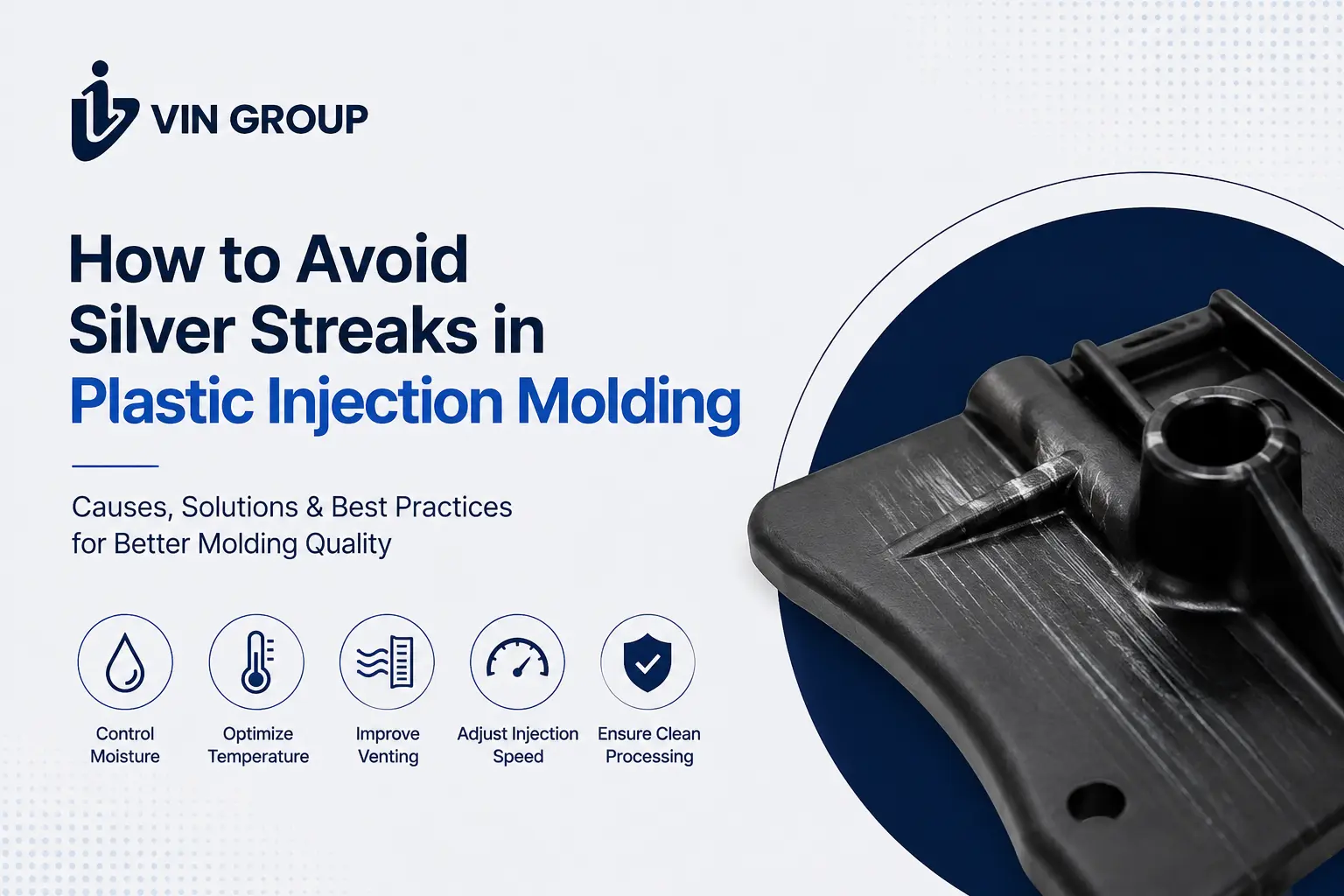
How to Avoid Silver Streaks in Plastic
Introduction
Silver streaks are one of the most common visual defects encountered in plastic injection molding. These defects appear as silver-colored lines or streak-like marks on the surface of molded plastic products, negatively affecting appearance, product quality, and customer satisfaction. For manufacturers, understanding how to avoid silver streaks in injection molding is essential for improving production efficiency and maintaining high product standards.
In many cases, silver streaks injection molding defects occur because of moisture contamination, improper processing conditions, trapped gas, material degradation, or mold-related issues. If not controlled, these defects can lead to rejected products, increased production costs, and inconsistent part quality.
At Vin Group, maintaining quality-focused plastic processing standards requires understanding manufacturing defects and implementing practical solutions. This blog explains the causes of silver streaks in injection molding, how to reduce them, and best practices for improving molding performance.
What Are Silver Streaks in Injection Molding?
Before learning prevention methods, it is important to understand silver streaks injection molding defects.
Silver streaks are visible linear marks that appear on the surface of molded plastic parts. These defects usually follow the direction of material flow and often resemble shiny or whitish streaks.
The defect commonly develops because moisture, trapped gas, volatile substances, or degraded resin escape during the molding process.
Manufacturers often confuse silver streaks with other surface defects, including splay marks injection molding, flow marks, or material contamination. Identifying the exact cause is essential for effective troubleshooting.
What Causes Silver Streaks?
A common question manufacturers ask is: What causes silver streaks?
Understanding the causes of silver streaks in injection molding helps manufacturers improve product quality and reduce rejection rates.
Moisture in Raw Material
Moisture contamination is one of the most common causes.
When plastic granules contain excess moisture, water vapor forms during melting and creates streak-like defects on molded surfaces.
This is one major reason why silver streak defect caused by moisture remains a common issue in plastic processing.
Excessive Processing Temperature
Overheating plastic resin may cause material degradation and gas generation.
Degraded polymers release gases that create silver marks on finished parts.
Trapped Air or Gas
Improper venting can trap gases inside molds.
During injection, trapped air escapes through the material, leaving visible streak patterns.
Material Contamination
Foreign particles, dust, oil, or degraded resin can contribute to surface defects.
Clean material handling practices reduce contamination risks.
Improper Injection Speed
Very high injection speeds may trap gases and increase defect formation.
Optimized molding conditions improve consistency.
How to Reduce Silver Streaks in Injection Molding?
One of the most important questions is: How to reduce silver streaks in injection molding?
Manufacturers can follow several practical methods to reduce these defects.
Dry Raw Materials Properly
Moisture control is one of the most effective solutions.
Proper drying helps eliminate water vapor and improves molding quality.
For hygroscopic materials, desiccant dryers are highly effective.
This step is critical for manufacturers exploring how to avoid silver streaks in injection molding.
Optimize Processing Temperature
Avoid overheating materials.
Maintain proper barrel temperature according to resin specifications.
Incorrect temperatures may increase degradation and gas formation.
Improve Mold Venting
Proper venting allows trapped air to escape during injection.
Poor ventilation often contributes to splay marks injection molding and silver streak defects.
Reduce Injection Speed
Slower and optimized injection speeds reduce turbulence and trapped gas.
This improves material flow and reduces surface defects.
Maintain Clean Material Handling
Prevent contamination by storing materials in sealed and moisture-free conditions.
At Vin Group, quality-oriented plastic processing emphasizes proper material preparation to reduce manufacturing defects.
Silver Streak Defect Caused By Common Processing Issues
Manufacturers frequently ask what a silver streak defect caused by processing problems looks like.
The most common process-related causes include:
Improper Drying
Residual moisture produces steam during molding.
Resin Degradation
Overheated polymers release gases.
Poor Mold Design
Improper venting traps gases inside cavities.
Incorrect Machine Settings
Excessive pressure or injection speed may worsen defect formation.
Correcting these factors significantly improves product consistency.
Understanding Splay Marks Injection Molding
Manufacturers often confuse silver streaks with splay marks injection molding defects.
Splay marks are streak-like defects appearing due to moisture, trapped gas, or contamination in molten resin.
Although visually similar, splay marks often indicate gas or moisture escaping under pressure.
Proper diagnosis helps identify the correct solution.
How to Fix Splay Injection Molding Problems
Another common question is: How to fix splay injection molding?
Several corrective actions can reduce splay defects.
Dry Resin Before Processing
Moisture is a major contributor to splay.
Improve Mold Ventilation
Proper airflow reduces trapped gas.
Adjust Melt Temperature
Avoid temperatures that degrade polymers.
Reduce Injection Speed
Controlled flow improves consistency.
Use Clean Materials
Avoid contamination from dust or degraded resin.
Following these steps improves surface quality and minimizes rejection rates.
How to Reduce Weld Lines?
Another frequently searched question is: How to reduce weld lines?
Weld lines appear where two material flow fronts meet during molding.
Although different from silver streaks, both defects affect surface appearance.
Methods to reduce weld lines include:
Increase Mold Temperature
Higher mold temperatures improve flow fusion.
Improve Gate Design
Proper gate positioning reduces visible weld lines.
Increase Injection Pressure
Better pressure helps merge flow fronts effectively.
Optimize Material Flow
Balanced flow improves part consistency.
Reducing weld lines enhances both appearance and structural strength.
How to Avoid Ejector Pin Marks?
Manufacturers also ask: How to avoid ejector pin marks?
Ejector pin marks appear when molded parts are ejected improperly.
Ways to prevent these defects include:
Optimize Ejection Force
Avoid excessive force during part removal.
Improve Cooling Time
Adequately cooled parts resist deformation.
Adjust Mold Design
Proper ejector placement distributes pressure evenly.
Maintain Mold Surface
Clean and polished molds reduce visible marks.
Preventing ejector marks improves surface aesthetics and product quality.
Related Injection Molding Defects
Silver streaks are not the only defect manufacturers face.
Sink Mark in Injection Moulding
A sink mark in injection moulding appears as a depression on the product surface due to uneven cooling or insufficient packing pressure.
Solutions include:
- Increasing packing pressure
- Improving cooling systems
- Optimizing wall thickness
Flow Mark in Injection Molding
A flow mark in injection molding appears as visible patterns caused by inconsistent resin flow.
These marks can be reduced through:
- Improved temperature control
- Optimized gate design
- Balanced injection speed
Understanding multiple defects helps manufacturers improve overall product quality.
Best Practices to Prevent Silver Streaks
Preventing defects is more cost-effective than fixing them later.
Manufacturers can reduce silver streaks injection molding issues by following these practices:
Use Proper Drying Systems
Dry resin before molding.
Monitor Processing Conditions
Maintain correct pressure, temperature, and speed.
Maintain Mold Venting
Good airflow prevents trapped gas.
Store Materials Properly
Avoid moisture absorption during storage.
Conduct Regular Maintenance
Clean equipment improves consistency.
At Vin Group, maintaining reliable processing conditions supports better product quality and reduced manufacturing defects.
Conclusion
Preventing silver streaks in plastic injection molding begins with identifying their root causes and maintaining strict control over material preparation and processing conditions. By ensuring proper resin drying, optimizing molding temperatures, improving mold venting, and minimizing contamination, manufacturers can significantly reduce surface defects, improve product consistency, and lower production waste.
At Vin Group, we help manufacturers enhance injection molding performance through advanced polymer solutions, optimized processing practices, and technical expertise. Our commitment to quality enables businesses to produce smooth, defect-free plastic components that meet the performance and aesthetic standards of today’s competitive manufacturing industry.